Who this is for
- You have a toothache that lingers after hot or cold, wakes you at night, or hurts when you bite.
- You have swelling, a pimple on the gum, or a tooth that has gone dark after an injury.
- A dentist found deep decay or a crack close to the nerve and you want to know what the choices are.
What we do at our office
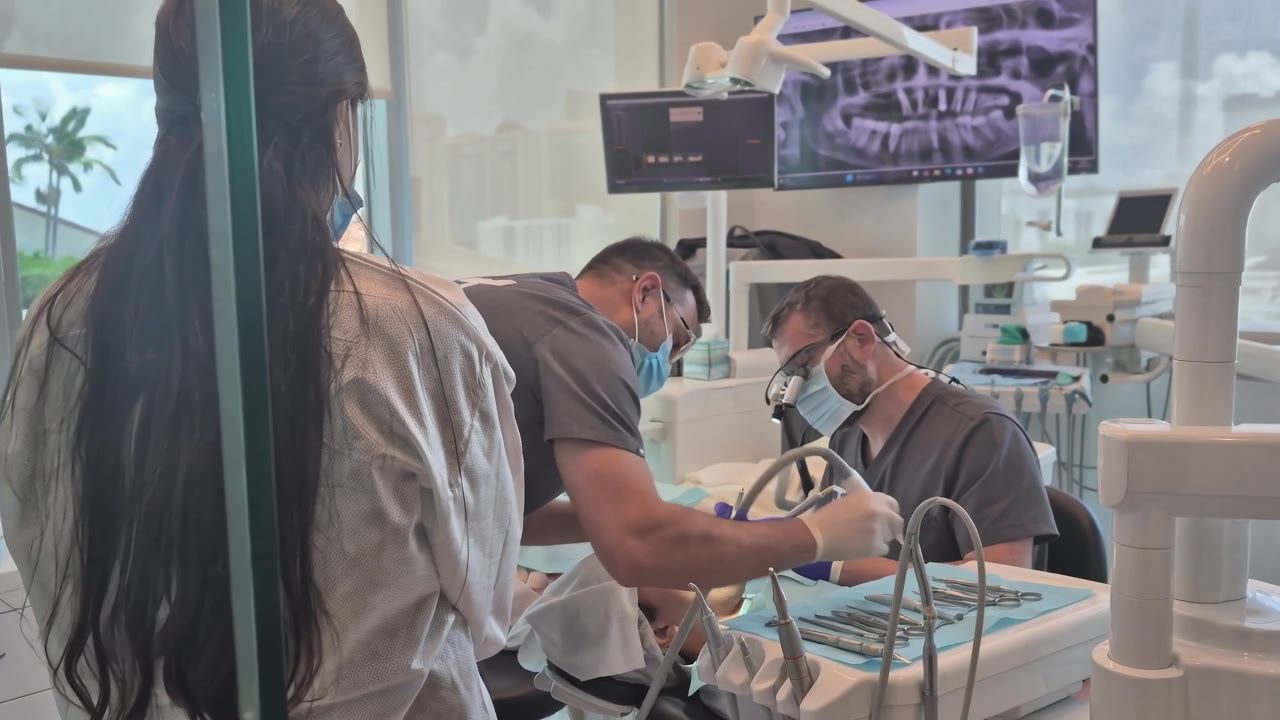
Dr. Baruch Tetri, DDS, is a periodontist, a specialist in the gums and the bone that hold teeth. He diagnoses the tooth: how it responds to cold, whether it hurts when tapped, how the gum around it probes, and what the X-ray shows at the root tip. Either way the diagnosis, the restoration afterward and the follow-up stay with us. Where the nerve is inflamed but still alive, a smaller procedure that keeps part of it (vital pulp treatment) is sometimes an option; we tell you when it is.
What happens at the visit
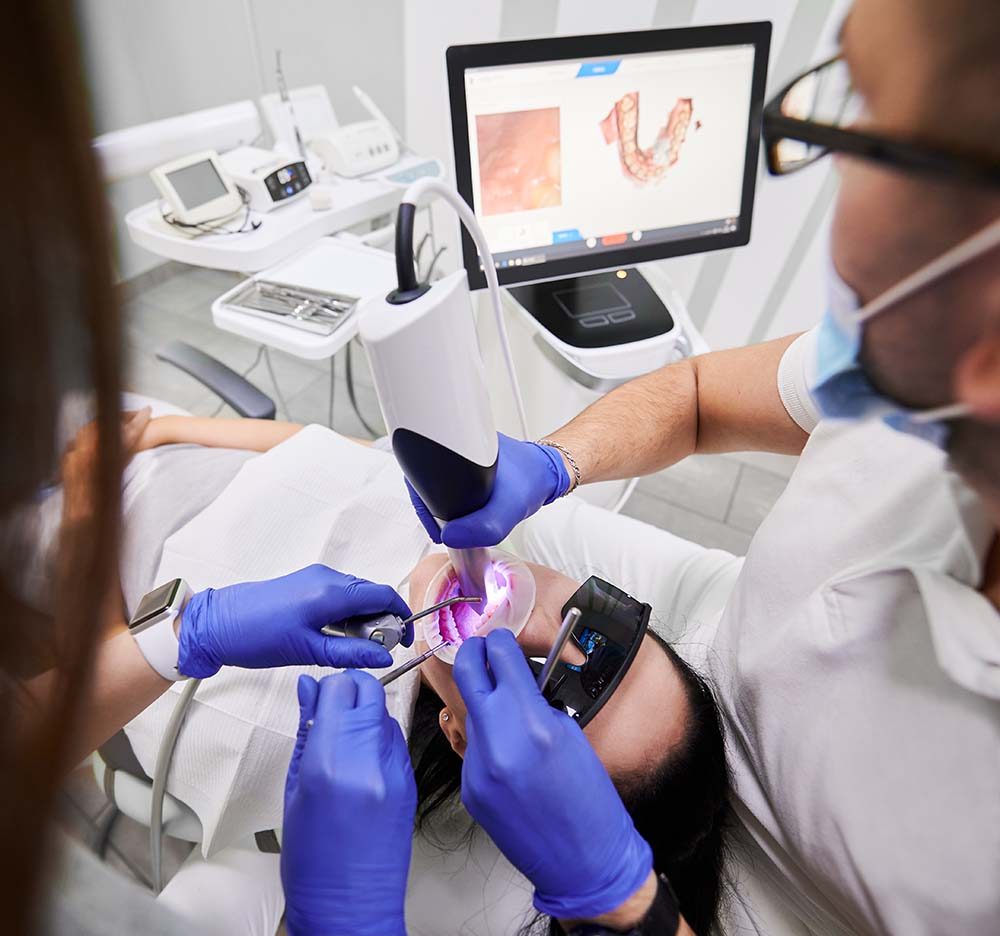
- Diagnosis. We go through your symptoms, test the tooth and its neighbors, and take the X-rays the question needs. A limited 3D scan (CBCT, a three-dimensional dental X-ray) is used only when a flat image cannot answer it: a suspected crack, an unusual root shape, or a tooth that was treated before.
- Numbing and isolation. The tooth is numbed with local anesthetic and we wait until it is fully numb. A thin rubber sheet (a dental dam) isolates it, keeping saliva out and instruments and solutions in. Sedation is available after a medical review, where our permits and team allow.
- Cleaning. A small opening is made into the tooth (on the chewing surface of a back tooth, behind a front tooth); the canals are measured, shaped with fine instruments and washed with disinfecting solutions.
- Filling and sealing. The clean canals are filled with a rubber-like material and sealed. A temporary or final filling closes the opening the same day.
- Restoration. Whether the tooth then needs a crown depends on how much tooth is left; a molar usually does. We check healing with an X-ray at follow-up.

Risks and limits
- Soreness for a few days is normal; a flare-up with swelling happens in a minority of cases and is treated.
- Rarely a canal is missed or an instrument breaks inside it. We tell you if that happens and what it means.
- A treated tooth can need retreatment or a small surgery at the root tip later.
- A root canal cannot save a tooth that is split or has lost too much structure to hold a restoration.
- Swelling that spreads or a fever means call us the same day. Trouble swallowing or breathing, or swelling that reaches the eye or neck, is an emergency: call 911.
Questions patients ask
Does a root canal hurt?
With the tooth fully numb, the treatment itself should not. The appointment is longer than a filling, not more painful. Soreness afterward usually responds to over-the-counter pain relief; we tell you what is safe for you.
Can I just take antibiotics instead?
For a localized tooth infection in a healthy adult, ADA guidance is to treat the tooth rather than prescribe antibiotics; they do not reach the dead tissue inside it. Antibiotics are added when infection is spreading or your health requires it.
Do I always need a crown afterward?
No. A front tooth with a small opening may need only a filling. Back teeth usually need a crown because the weakened walls can crack under chewing.
What if I do nothing?
An infected pulp does not recover on its own. Pain may come and go, but the infection at the root tip tends to grow and can end in an abscess and the loss of the tooth.
Sources
- ESE S3 guideline: Treatment of pulpal and apical disease
- AAE: Treatment Standards executive summary
- AAE/AAOMR: CBCT in endodontics joint position statement
- Cochrane: Single versus multiple visits for endodontic treatment
- ADA: Antibiotics for pulpal and periapical pain and swelling
- ADA: Acute dental pain living guideline
Request a visit
Tetri’s Smile · 16690 Collins Avenue, Suite 701, Sunny Isles Beach, FL 33160 · Serving Aventura, Bal Harbour, North Miami Beach, Hallandale Beach and greater Miami.