
Who this is for
- You have been told a first or second molar needs a root canal and want to know what makes it different.
- You have a back tooth that aches on biting, reacts to heat, or sits under a deep filling or crown.
- You have a molar that was treated before and still hurts or shows a dark area on the X-ray.
What we do at our office
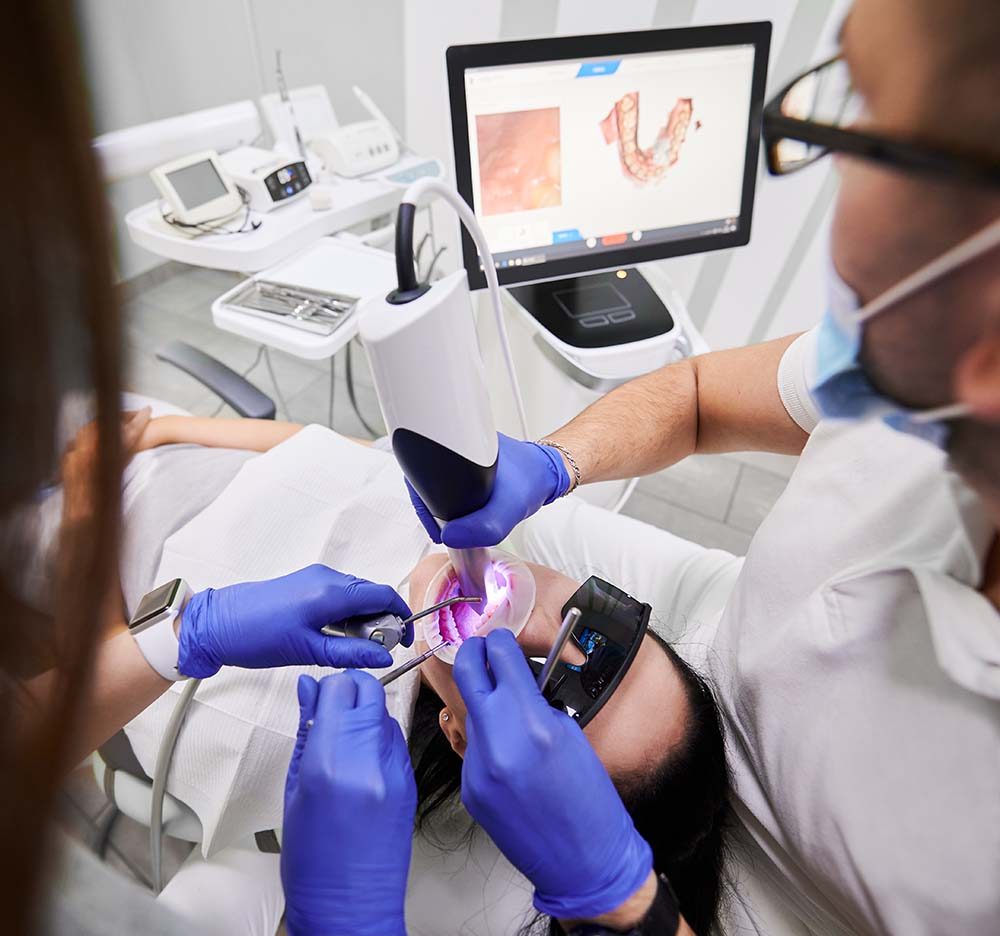
Dr. Baruch Tetri, DDS, is a periodontist, the specialty that covers the gums and the bone around teeth. He makes the diagnosis and decides whether the tooth is worth saving: a molar with a split root or too little structure left for a crown is better removed than treated. The American Association of Endodontists’ case difficulty form grades every molar as a harder case. Whoever treats the canals, the crown afterward and the follow-up are done here.
What happens at the visit
- Finding the tooth that hurts. Molar pain is often referred from a neighbor or from the other jaw, so we test the suspect tooth and the ones around it before anything is opened.
- Mapping the roots. Angled X-rays first; a limited CBCT (a three-dimensional dental X-ray) when the canals look curved or calcified (narrowed by mineral deposits), the tooth was treated before, or a crack is suspected.
- Numbing and isolation. Local anesthetic, with a second technique for lower molars when an inflamed tooth is slow to go numb; then a dental dam (a thin rubber sheet) around the tooth.
- Finding every canal. The hidden fourth canal in upper molars and the extra branches lower molars often have are searched for one by one; a canal that is missed is a known reason a root canal fails later.
- Cleaning, filling, sealing. Fine instruments and disinfecting solutions, then a rubber-like filling in each canal. If the tooth needs two visits, a medication is left inside and a temporary filling seals it between them.
- The crown. A root-filled molar loses the structure that kept it stiff, so it is usually covered with a crown as soon as it is comfortable.

Risks and limits
The general root canal risks are on the root canal page; molars add these:
- A crack under an old crown may show itself only once the tooth is opened; a split root means extraction.
- The hidden fourth canal in an upper molar is the one most often missed, and a missed canal can keep the infection going.
- A temporary filling between visits can wear or fall out; chew on the other side and call us if it does.
- Waiting on the crown risks a fracture that no root canal can fix.
Questions patients ask
Why does a molar take longer than a front tooth?
Three or four canals instead of one, often curved, in a tooth at the back of the mouth. Each one has to be found, measured, cleaned and filled.
Will I be sent to a specialist?
An endodontist is the right choice when the canals are unusually curved or calcified, when the tooth was treated before, or when mouth opening or anatomy make the case complex; who treats yours is decided at the diagnosis visit.
Is it worth saving, or should I just pull it?
A molar that can be restored and has healthy bone around it is worth keeping; nothing replaces a natural root. When it cannot be, we compare an implant, a bridge and leaving the gap honestly, on the tooth extraction page and in the chair.
Sources
- ESE S3 guideline: Treatment of pulpal and apical disease
- AAE: Endodontic Case Difficulty Assessment Form
- AAE/AAOMR: 2025 CBCT position statement release
- PubMed: MB2 prevalence systematic review
- PubMed: Outcomes of primary root canal therapy systematic review
Request a visit
Tetri’s Smile · 16690 Collins Avenue, Suite 701, Sunny Isles Beach, FL 33160 · Serving Aventura, Bal Harbour, North Miami Beach, Hallandale Beach and greater Miami.