Who this is for
- You are due for a check-up, or it has been more than a year since your last one.
- Your gums bleed when you brush or floss, or your breath has changed, and you want to know whether a regular cleaning is enough.
- You have implants, crowns, a bridge, braces or aligners, which collect plaque where a toothbrush misses it.

What we do at our office
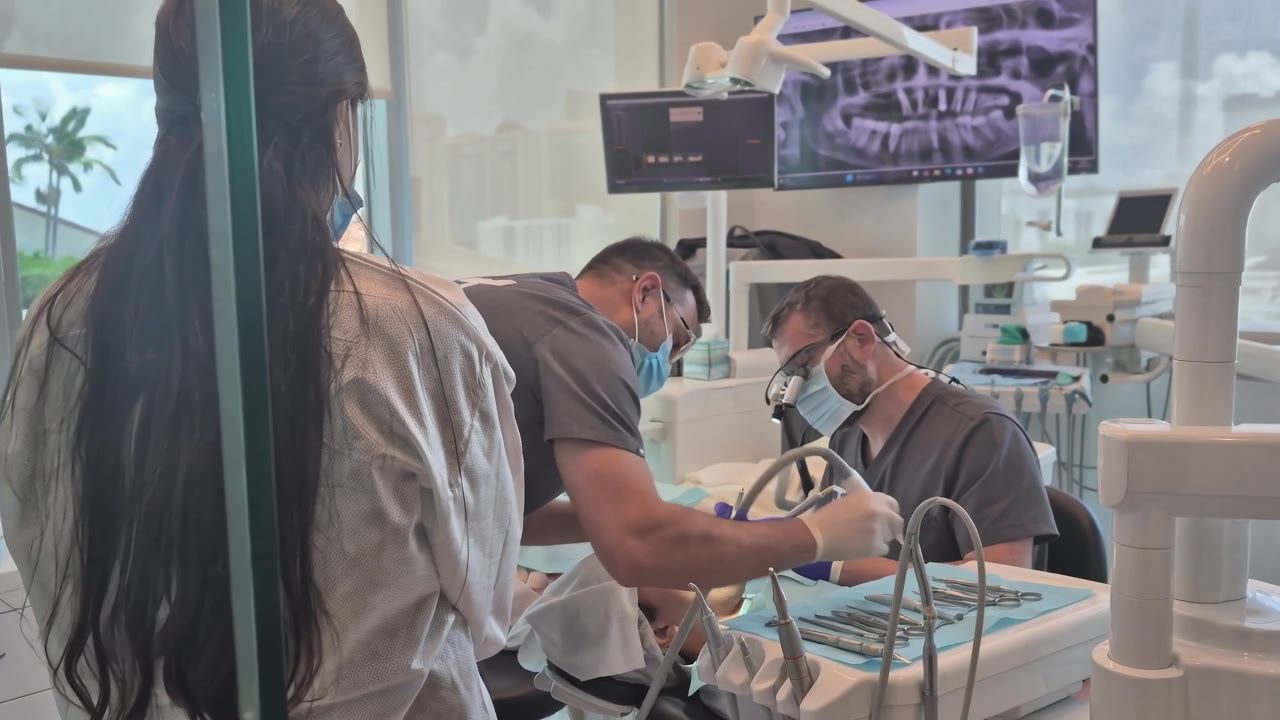
Check-up cleanings are done in our office.
At check-ups we measure the gum pockets around each tooth, so gum disease is found while it is still easy to treat.
Where stain or soft film builds up around braces, implants or crowns, we may finish the cleaning with air polishing (Airflow), a fine spray of powder, water and air.
What happens at the visit
- Your health history. We ask about medicines, health conditions, allergies and anything you have noticed, because some conditions and medicines affect the gums and how we treat you.
- Examination. We check each tooth, filling and crown, your bite, and the soft tissues of the mouth: the tongue, cheeks, palate and throat.
- Gums. We look for bleeding, swelling and gums that have pulled back from the teeth.
- X-rays, when they are due. X-rays show decay between the teeth and bone levels that an examination cannot. How often you need them depends on your teeth, your gums and your risk, not on a fixed calendar, so not every visit includes them.
- Cleaning. We remove tartar above and just below the gumline, then polish away surface stain.
- Your plan. We tell you what we found, what needs treatment, what can be watched and when to come back.
A check-up and cleaning takes about an hour.
How often to come back
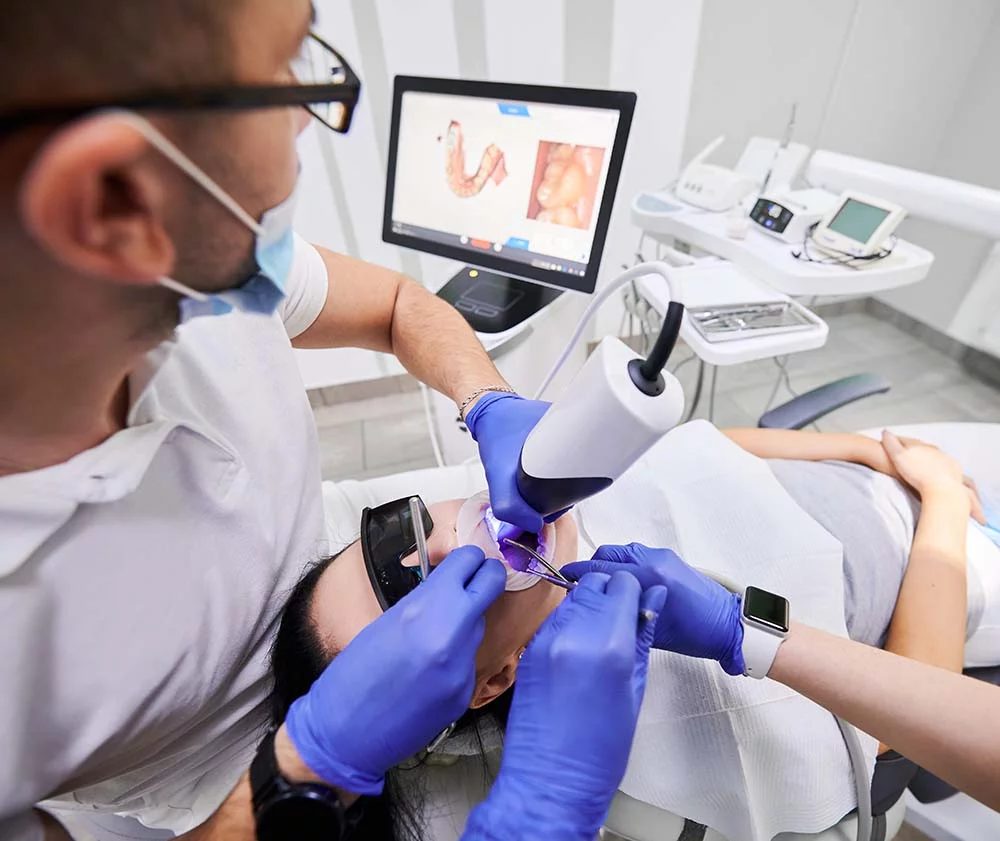
The right interval depends on you. In a review of the research, adults who came every six months did no better than adults whose interval was set by their risk, and for adults a two-year interval made little difference over four years. So we set the interval with you, from your gums, your history of decay and your general health.
- Most adults with healthy gums come back every four to six months.
- After treatment for gum disease, maintenance visits are usually every three to six months.
- The research on intervals for children is less certain; for children’s check-ups, see pediatric dentistry.
A regular cleaning or a deep cleaning?
A regular cleaning is for healthy gums or early gum inflammation (gingivitis), which reverses with good cleaning at home and in the office. When the gum has started to come away from the tooth (periodontitis), deposits sit on the root below the gumline, where a regular cleaning does not reach; that needs deep cleaning, scaling and root planing with the area numbed. We tell you which one you need after the examination, not before.
Between visits
What you do every day matters more than any single cleaning. In adults without severe gum disease who see a dentist regularly, a review of the research found that routine cleanings reduce tartar but make little difference to gum inflammation; daily cleaning at home is what keeps the gums healthy between visits.
- Adults: brush twice a day with a soft brush and fluoride toothpaste, clean between your teeth once a day with floss, small brushes or a water flosser, and replace your toothbrush every three to four months.
- Children under 3: a smear of fluoride toothpaste the size of a grain of rice, from the first tooth.
- Children 3 to 6: a pea-sized amount, twice a day for two minutes, with an adult watching so it is not swallowed.
- Braces, aligners, implants and bridges: small brushes or a water flosser reach where floss does not; ask us to show you at the visit.
Risks and limits
- Inflamed gums may bleed and feel tender for a day or two after a cleaning; this settles as they heal.
- Teeth can feel sensitive to cold for a short time, especially where roots are exposed.
- A cleaning removes tartar and stain; it does not treat gum disease below the gumline, repair a cavity or whiten teeth.
- Dental X-rays use a very low dose of radiation, which is why they are taken only when they are needed.
Questions patients ask
Does a cleaning hurt?
Usually not. Inflamed gums and exposed roots can be tender; tell us, and we slow down or numb a sensitive area.
Do I need X-rays at every visit?
No. How often depends on your teeth, gums, age and risk. Adults with healthy teeth and gums need them less often than someone with active decay or gum disease.
Do I still need cleanings if I brush and floss well?
Yes, though perhaps less often. Tartar forms even with good brushing, and the examination finds problems you cannot see yourself.
What does it cost, and does insurance cover it?
Most dental plans cover preventive check-ups and cleanings, with limits on how often. We do not accept dental insurance for adults.
Sources
- ADA MouthHealthy: X-rays
- ADA Oral Health Topics: Dental radiographs
- ADA MouthHealthy: Brushing your teeth
- ADA MouthHealthy: Flossing
- ADA MouthHealthy: Fluoride
- Cochrane review: Recall intervals for oral health in primary care patients (2020)
- Cochrane review: Routine scale and polish for periodontal health in adults (2018)
Request a visit
Book a check-up and you will leave knowing the state of your teeth and gums and when to come back; we are at 16690 Collins Avenue, Suite 701, Sunny Isles Beach, serving Aventura and greater Miami.