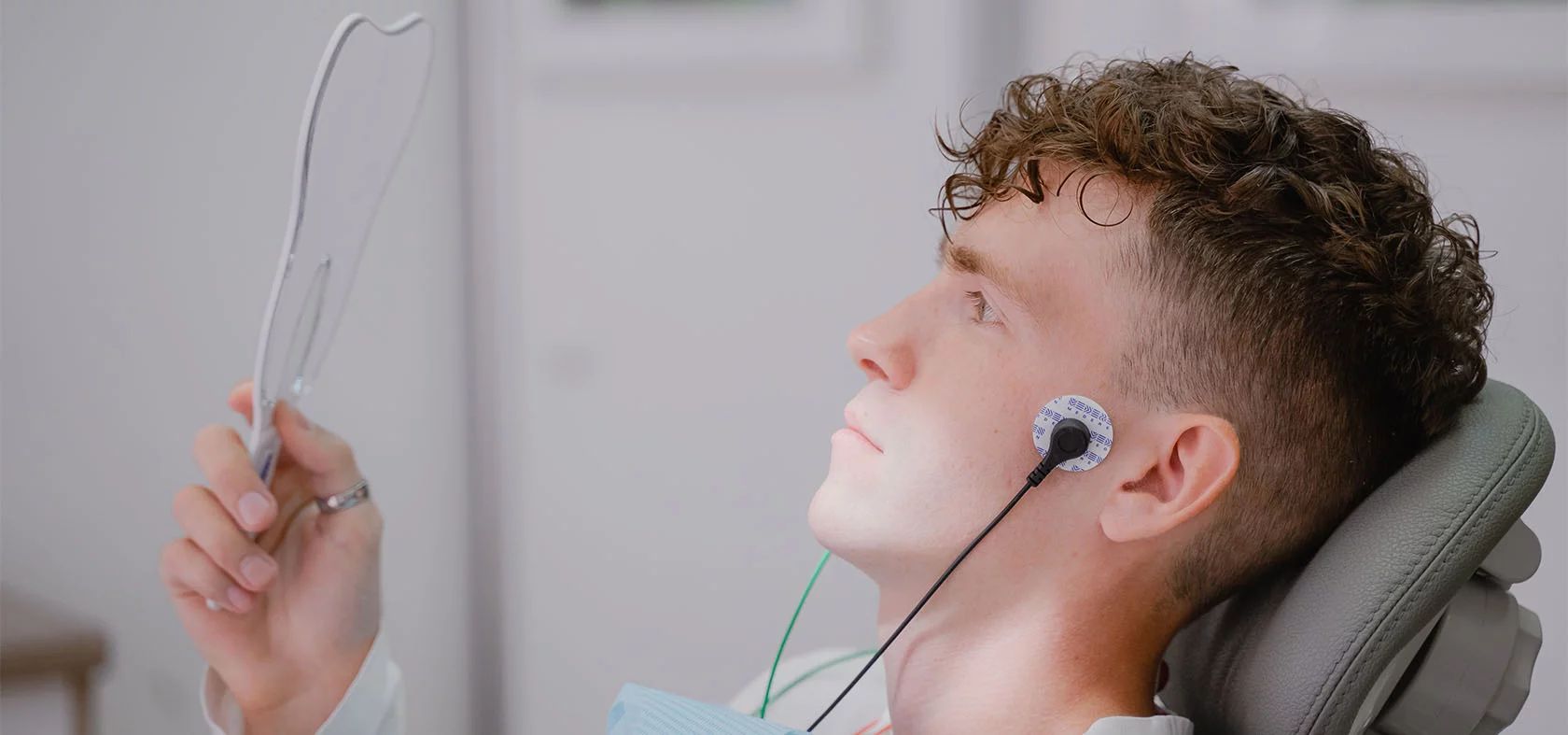
Who this is for
- Jaw or chewing-muscle pain, locking or limited opening that gets in the way of eating, speaking or sleep.
- Painful clicking, popping or grating, facial tenderness, or a bite that feels as if it has changed.
- Anyone who has been offered a bite adjustment, braces or crowns for jaw pain and wants a second opinion first.
What we do at our office
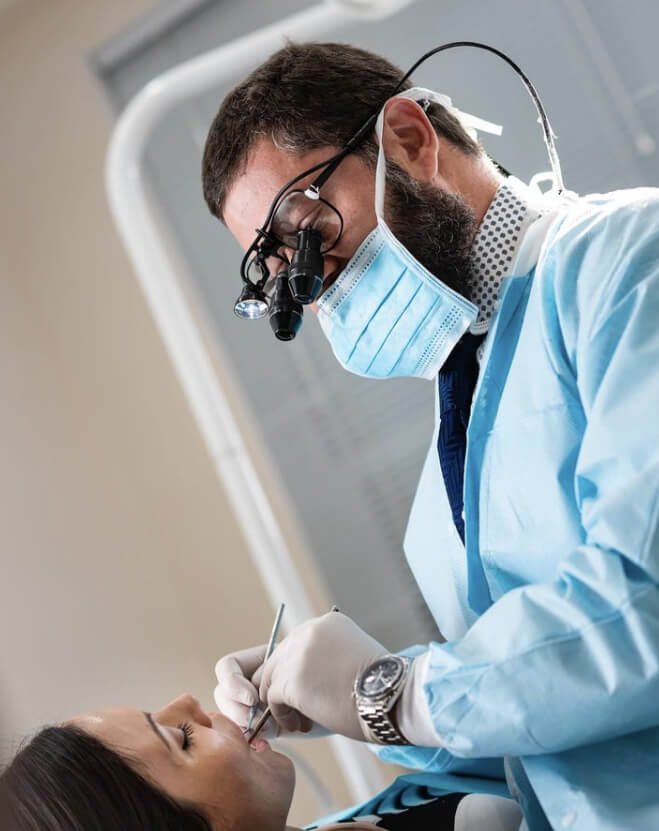
Dr. Baruch Tetri, DDS, is a periodontist. He earned his DDS at NYU College of Dentistry in 2006, completed his Certificate in Periodontics in 2009, and is a Diplomate of the American Board of Periodontology. Periodontics is the specialty of the gums and the bone that hold the teeth. Dr. Tetri examines you himself.
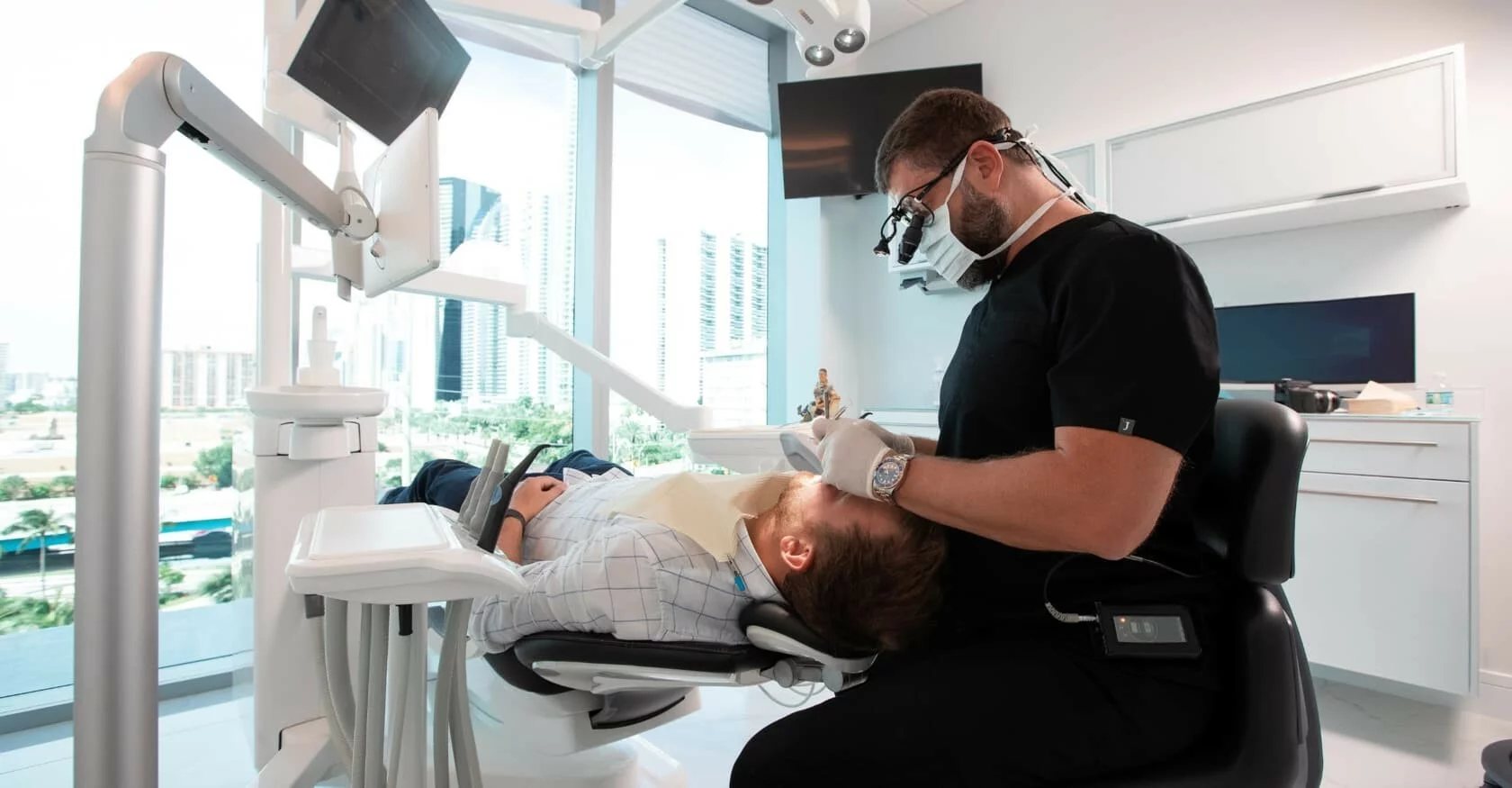
Conservative care is delivered here: explanation, habit changes, heat or cold, guided jaw exercises and, where indicated, a night-time appliance. A CBCT scan (a three-dimensional dental X-ray) is taken in our office when a bone question needs it; MRI is by referral.
What happens at the visit
- We listen. When the pain began, where it is felt, what provokes it, locking, injury, headaches, sleep, previous treatment and medicines.
- We examine. Jaw movement, the joints, the chewing muscles, the teeth and gums. We press where it hurts to see whether that reproduces your familiar pain.
- We decide whether imaging is needed. Previous images are reviewed first. CBCT shows bone but not the disc (the cushion inside the joint); MRI is the reference examination for the disc and soft tissues. A bigger scan is not a better diagnosis.
- We name the working diagnosis and say what each test can and cannot answer. A dental, neurologic, inflammatory or sleep-related cause goes to the right colleague.
- We start conservatively, with goals, precautions and a date to reassess. An appliance, if we use one, is designed not to change your bite.
Risks and limits
- An appliance can protect teeth and may ease symptoms; the evidence that it relieves TMD pain is limited.
- The bite is not the default cause. Grinding teeth down, moving them or placing crowns to treat TMD creates irreversible change without reliable benefit and can make symptoms worse (NIDCR, the National Institute of Dental and Craniofacial Research).
- Many people improve with conservative care; some have a long-term condition that is managed rather than resolved.
- Joint injections and surgery are for selected conditions, after a full discussion, and never a first step for jaw pain that has not yet been diagnosed.
- If you have trouble breathing or swallowing, swelling that is spreading fast with fever, or a major injury, call 911. For a jaw that will not open or close or new numbness, call 786-320-5445 during office hours.
Questions patients ask
Is my bite causing my jaw pain? Usually not. Current evidence does not support a "bad bite" or past orthodontics as the general cause of TMD. If your teeth need work, that is a separate decision with its own reasons.
Do I need a scan or an MRI? Only when the result would change what we do. Most diagnoses come from the history and the examination.
Will a night guard fix it? It can protect your teeth and may ease symptoms. We agree what it is for, how long you wear it and when to stop, and we check it rather than assume.
Sources
- NIDCR: TMD — symptoms, diagnosis, and treatment
- DC/TMD: validated clinical and research diagnostic criteria
- BMJ: guideline for chronic pain associated with TMD
- JADA: evidence review of EMG for TMD diagnosis