Who this is for
- Pain, swelling, repeated infection of the gum over a wisdom tooth, food trapping, decay, or a tooth you cannot keep clean.
- A wisdom tooth that is damaging the molar in front of it, or that is in the way of implants, aligners or another planned treatment.
- Someone with quiet wisdom teeth who wants a balanced opinion on removing them or keeping watch.
What we do at our office
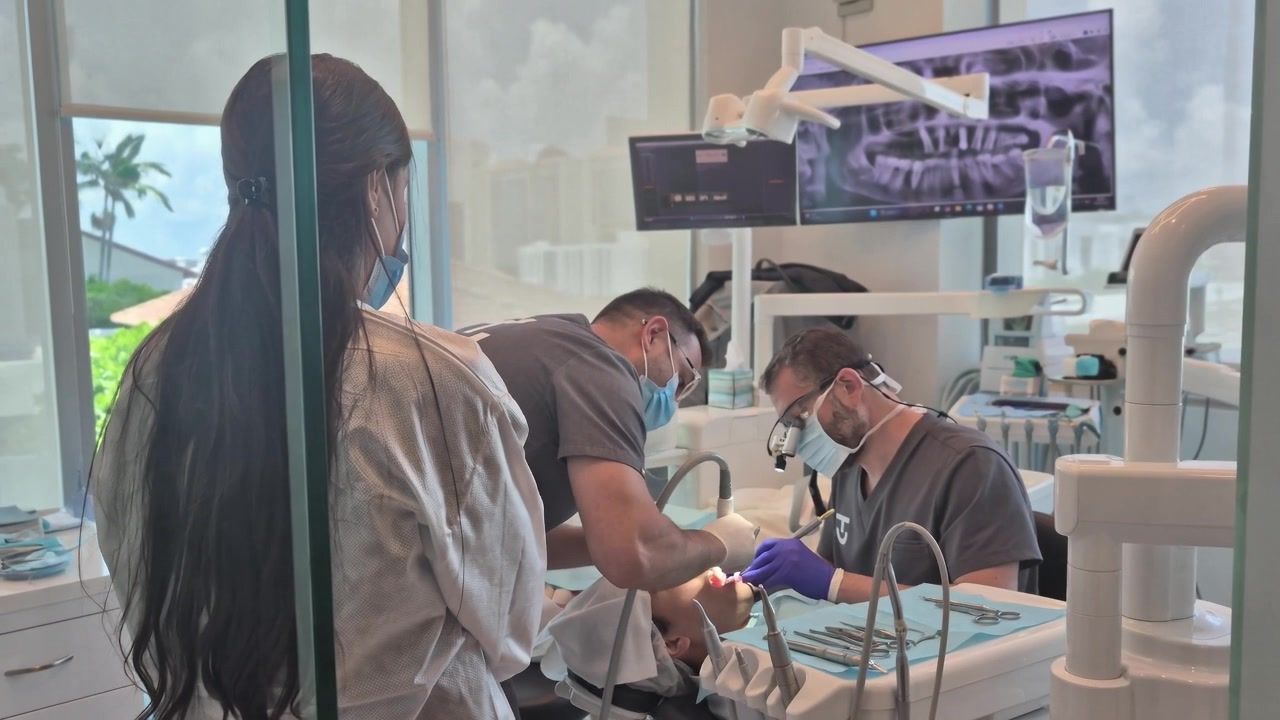
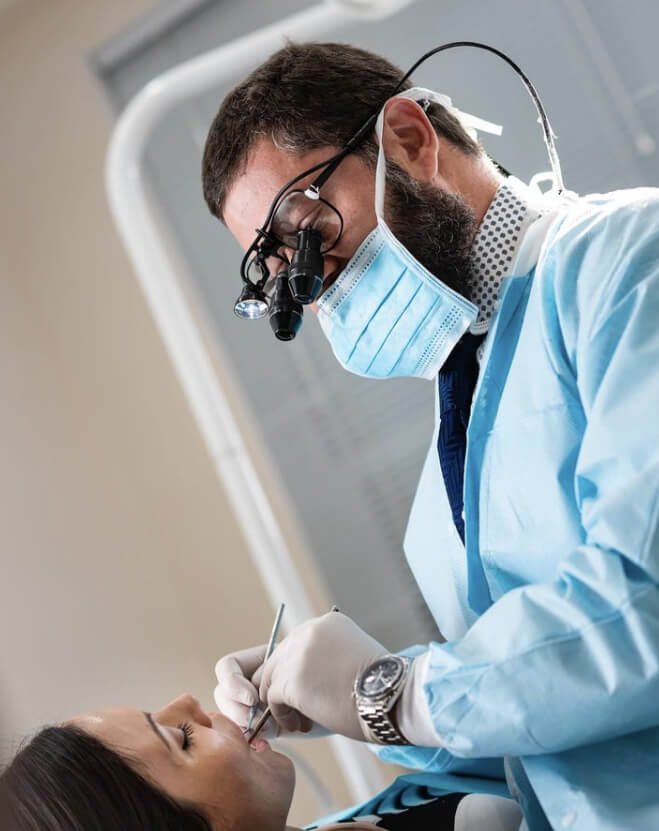
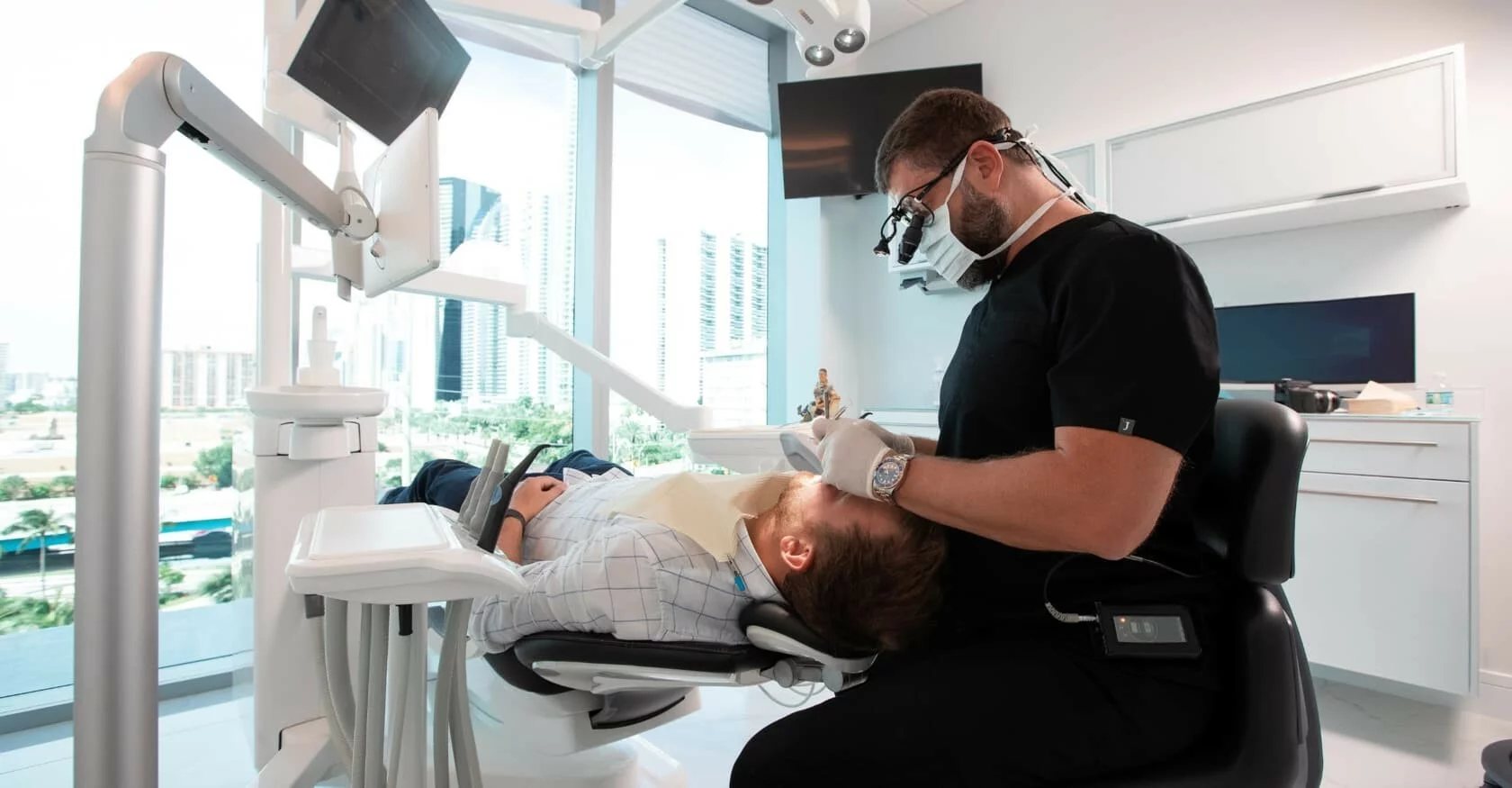
Dr. Baruch Tetri does the examination, the imaging decision and the plan. He removes wisdom teeth himself, in our office. Where we remove the tooth ourselves, it is done under local anesthesia, with sedation options after a medical review, where our permits and team allow. A three-dimensional scan (CBCT) is taken at our office on the Planmeca Viso G7 when a flat X-ray leaves a question about the nerve or the roots.
What happens at the visit
- We find the source: the tooth, the gum over it, the molar in front, your access for cleaning, any sign of infection, and your history and medicines.
- We image in proportion. A panoramic X-ray is usually enough. CBCT is reserved for a specific question, usually how close a lower root sits to the nerve, when the answer would change the plan or the risk discussion.
- We compare the paths: removal, keeping watch with periodic review, treating a local problem, a modified procedure such as coronectomy (removing the crown and leaving the roots in place against the nerve), or referral.
- You consent to a plan that names the anesthesia, your own risks, the expected recovery, and whom to call.
- Written aftercare: medication, diet, hygiene, activity, smoking, bleeding control, driving limits, and how to reach us.
Risks and limits
- A quiet tooth can still have decay or gum disease, which is why we examine rather than assume.
- For an impacted wisdom tooth with no symptoms and no disease, the evidence does not show that routine removal is better than keeping it under review. We do not remove a tooth just because it is there.
- Keeping a tooth is an active plan: periodic review, and imaging when indicated, because the balance can change.
- CBCT is not routine before every lower extraction and has not been shown to prevent nerve injury on its own; it changes what we know, not the anatomy.
- Surgery carries risks: pain, swelling, bruising, bleeding, infection, dry socket, limited mouth opening, damage to the neighboring tooth, altered sensation in the lip, chin or tongue from nerve injury, an opening into the sinus with upper teeth, and retained root fragments. We go through your own risks with you.
- Persistent bleeding, worsening pain or swelling, fever or pus need a call to us the same day.
Questions patients ask
Do all wisdom teeth need to come out?
No. We remove a wisdom tooth for a reason: pain, infection, decay that cannot be managed, gum disease, damage to the molar in front, a cyst, or a planned treatment it blocks. Without one of those, keeping watch is a legitimate plan.
How long is recovery?
Lower impacted teeth take longer than upper erupted ones.
Will I be sedated?
Local anesthesia is standard. Sedation is an option after a medical review, where our permits and team allow, and it means an escort for the rest of the day. Our sedation page explains the levels.
What is a dry socket?
The clot in the socket is lost early and the bone is exposed, usually a few days after removal, with an ache that gets worse instead of better. It is treatable; call us.
Could I lose feeling in my lip?
Lower wisdom-tooth roots can sit close to the nerve that supplies the lip and chin. Altered sensation is uncommon and usually temporary; where the scan shows the roots wrapped around the nerve, coronectomy or referral lowers the risk. We tell you your own odds before you decide.
Related under Complex care: Sedation · Dental implants · Periodontal care and surgery.
Sources
- Cochrane: Removal versus retention of asymptomatic impacted wisdom teeth
- EADMFR: CBCT imaging of the mandibular third molar
- AAOMS patient information: Potential complications