Signs to look for
- Gums that bleed when you brush or floss.
- Red, swollen or tender gums.
- Gums pulling away from the teeth, so the teeth look longer.
- Bad breath that does not go away.
- Teeth that feel loose, have moved, or are sensitive, or pain when you chew.
- A change in how your teeth meet when you bite, or in how a partial denture fits.
Early gum disease usually does not hurt, which is why many people find out at a check-up.
Gingivitis or periodontitis?
Gingivitis is inflammation of the gums without loss of the bone around the teeth. It is common, and it reverses with daily brushing and cleaning between the teeth, plus a professional cleaning to remove tartar.
Periodontitis is gum disease that has started to destroy the attachment and the bone that hold the teeth. It does not reverse, but it can be stopped and kept stable. Periodontists describe it by stage (how far it has gone, from I to IV) and grade (how fast it is moving, from A to C), and that guides the treatment. About 4 in 10 adults in the United States aged 30 or older have some periodontitis.
Who is at higher risk
- Smoking or other tobacco use, the most important risk you can change.
- Diabetes, especially when blood sugar is not well controlled.
- Older age, and a family history of gum disease.
- Hormonal changes, such as pregnancy or menopause.
- Medicines that dry the mouth or make the gums overgrow.
- Crowded teeth, clenching or grinding, stress, and poor nutrition.
What we do at our office
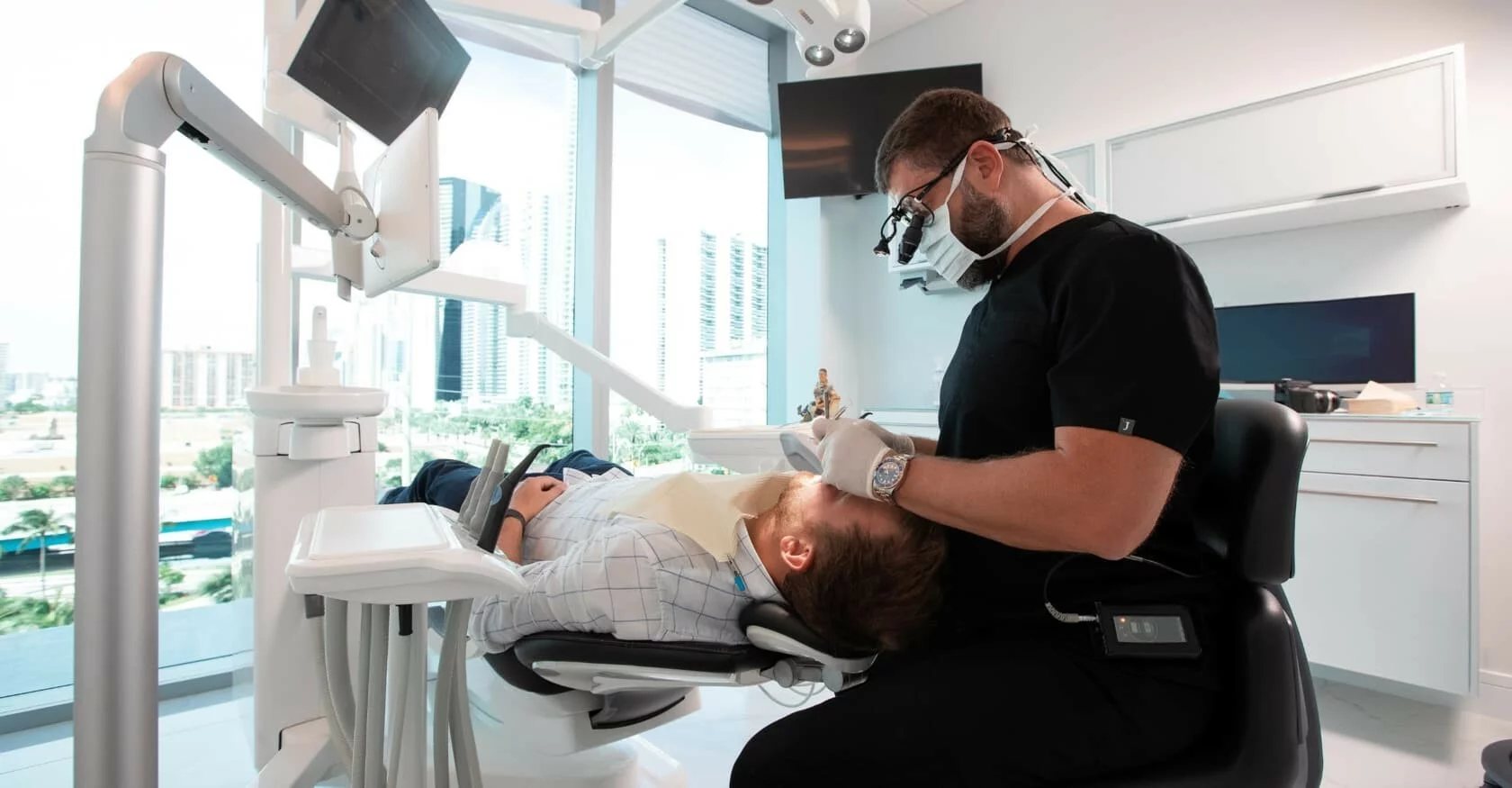
Dr. Tetri makes the diagnosis and plans your treatment himself. At the first visit we chart every tooth: the depth of the gum pockets (healthy ones are about 1 to 3 millimeters), bleeding, gums that have pulled back, and any looseness, with the X-rays needed to see the bone. Then we tell you which diagnosis you have and what treatment it needs.
How it is treated
- Removing the cause. Coaching on cleaning at home, a professional cleaning above the gumline, and help with smoking and diabetes where they apply. Gingivitis usually resolves at this step; see teeth cleaning and check-ups.
- Deep cleaning. For periodontitis, scaling and root planing removes the deposits from the root surfaces below the gumline, with the area numbed. See deep cleaning.
- Re-checking. About six to eight weeks later we measure again. Sites that have healed move to maintenance; sites that stay deep are treated again or considered for surgery. See periodontal care and surgery.
- Maintenance. Periodontitis comes back without upkeep. Most patients treated for it return for maintenance every three to six months.
Gum disease and your general health
- Diabetes. The two affect each other. In people with both, treating periodontitis lowered average blood sugar (HbA1c) by about 0.4 percentage points three to four months later, in a review of 30 trials. It helps, but it does not replace diabetes care.
- Heart disease. People with gum disease have more heart and blood-vessel disease, and the two share risk factors such as smoking and diabetes. The American Heart Association found that the research does not show that gum disease causes heart disease, or that treating it prevents heart disease.
- Pregnancy. Hormonal changes make the gums bleed and swell more easily. Gum treatment is safe during pregnancy; see deep cleaning.
Risks and limits
- Treatment stops the disease; it does not regrow lost bone or bring back gum that has gone, though surgery can rebuild some of it in selected cases.
- In advanced periodontitis, some teeth can be lost even with good treatment.
- As the swelling goes down, gums can shrink and teeth can look longer or feel sensitive to cold.
- Without maintenance visits and cleaning at home, periodontitis comes back. Smoking slows healing.
Questions patients ask
My gums bleed, but nothing hurts. Is that gum disease?
Bleeding is the earliest sign of gum inflammation. Most often it is gingivitis, which reverses; a check-up tells you whether there is also bone loss.
Can I treat gum disease at home?
Gingivitis, mostly yes: brushing twice a day, cleaning between the teeth daily and a professional cleaning. Periodontitis needs professional treatment below the gumline; a mouthwash on its own does not treat it.
Do I need a periodontist?
A general dentist treats gingivitis and many mild cases. Advanced or fast-moving periodontitis, and gums around implants, are a periodontist’s work. Here, the periodontist sees you directly.
Sources
- CDC: About periodontal (gum) disease
- NIDCR: Periodontal (gum) disease
- Papapanou et al.: Periodontitis, consensus report of the 2017 World Workshop (2018)
- Sanz et al.: Treatment of stage I–III periodontitis, EFP S3 guideline (2020)
- Cochrane review: Treatment of periodontitis for glycaemic control in diabetes (2022)
- American Heart Association: Periodontal disease and atherosclerotic vascular disease (2012)
Request a visit
Book a gum examination and you will leave knowing which diagnosis you have and what it needs; we are at 16690 Collins Avenue, Suite 701, Sunny Isles Beach, serving Aventura and greater Miami.