Who this is for
- Your tooth is heavily filled, cracked, worn or broken and a filling will not hold.
- You have had a root canal on a back tooth and it needs protecting.
- An old crown is loose, chipped or decayed at the edge, or you no longer like how it looks.

What we do at our office
Dr. Baruch Tetri, DDS, is a periodontist (a dentist who specializes in the gums and the bone that hold teeth). He examines the tooth, its nerve and the gum around it before anything is shaped, and says plainly when a smaller restoration would do. Crowns are prepared and fitted in our office and made by our laboratory.
Coverage is a design decision, not a diagnosis. We first work out what is wrong and whether the tooth can be saved, and only then how much of it needs covering.
What happens at the visit
- Diagnosis. We look for decay, cracks and wear, test whether the nerve is healthy, and check the gum and your bite. A crown does not fix a dying nerve, so that question comes first.
- Options and fees. If the walls of the tooth are sound we usually suggest an onlay instead; see Inlays and onlays (/inlays-onlays).
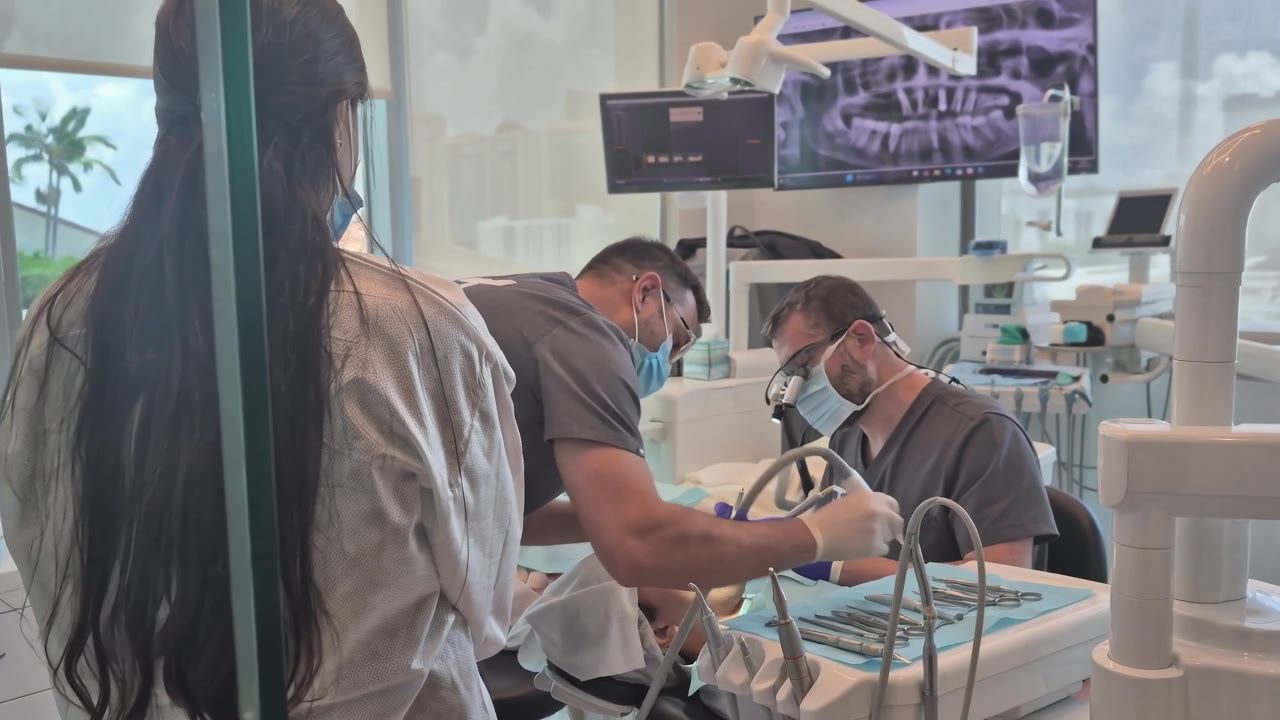
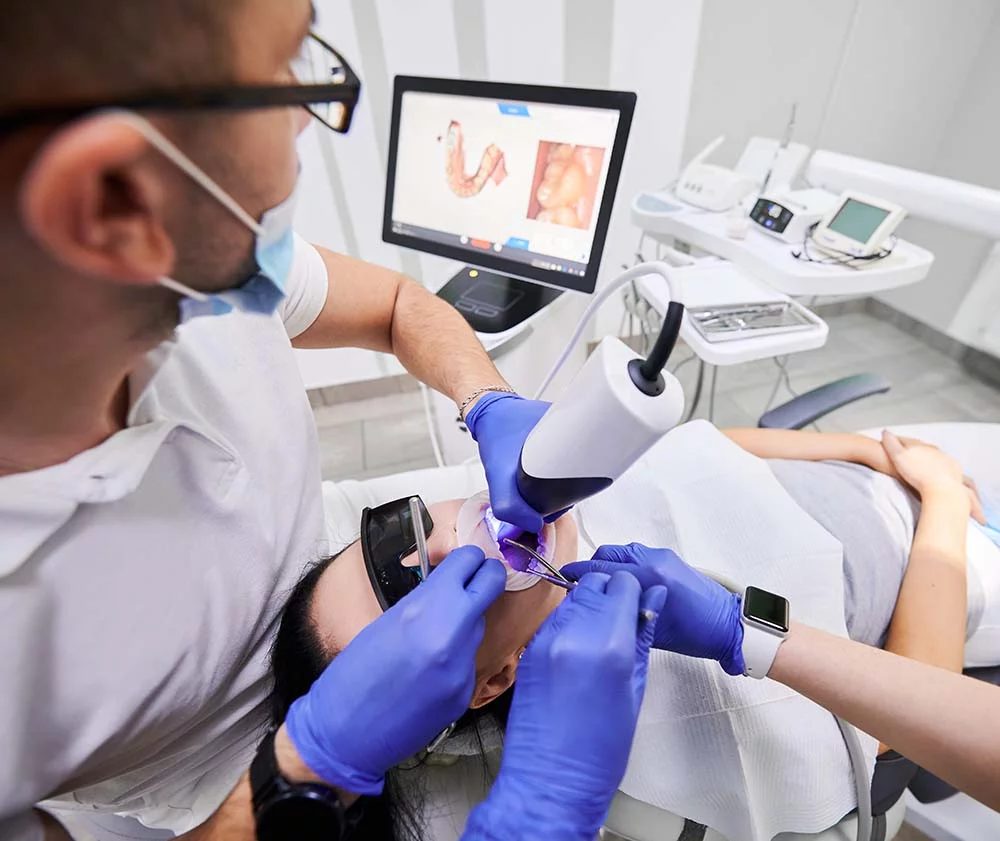
- Preparation. Under local anesthesia we remove the old filling and any decay, replace what is missing with a core (filling material that rebuilds the lost part of the tooth), shape the tooth and take a digital scan. You leave with a temporary crown.
- Fitting. We check the fit at the edge, the contacts with the neighbors, the bite and the shade, then cement or bond the crown. A bite that feels high afterward is adjusted, not lived with.
Risks and limits
- Some teeth are sensitive for a while afterward, and a few later need root canal treatment because the nerve was already inflamed.
- A cracked tooth can still split under a crown. We tell you that before we start, and some cracked teeth cannot be saved.
- If decay runs below the gum, the tooth may need crown lengthening (a small gum procedure that exposes more tooth), or it may not be restorable.
- Porcelain can chip and cement can wash out; no crown lasts forever.
- Decay can start at the crown edge if cleaning slips there.
Questions patients ask
Does a root-canal tooth always need a crown?
Back teeth usually do, because they lose strength and take the chewing load. Front teeth often do not if enough tooth remains. A post (a peg set in the root) helps hold the core in place; it does not make the root stronger.
What is the crown made of?
Most front crowns today are all-ceramic and shade-matched to the neighboring teeth; back crowns are ceramic too: depending on your bite, they are made of zirconia, lithium disilicate or feldspathic porcelain. We agree the shade with you before the laboratory makes it.
Can a crown be done in one visit?
It can be: our office has its own milling machine. Even then, a tooth with an uncertain nerve or inflamed gum is better left in a temporary until it settles.
How long does a crown last?
Ten to fifteen years is common and many last longer. What shortens that is decay at the edge, grinding, and a nerve that gives trouble later.
Sources
- ADA MouthHealthy: Crowns
- AAE: Cracked teeth
- European Society of Endodontology: Restoration of root-filled teeth
- Systematic review: Partial versus full crowns on posterior teeth
- ACP/ADA: Recall and maintenance of dental restorations
Request a visit
Tetri’s Smile · 16690 Collins Avenue, Suite 701, Sunny Isles Beach, FL 33160