Who this is for
- You have decay, a chipped or worn tooth, or a filling that is failing.
- You have been told you need a crown or a bridge and want the smaller options compared honestly.
- You want appearance, chewing, gum health and future upkeep considered in one plan rather than tooth by tooth.

What we do at our office
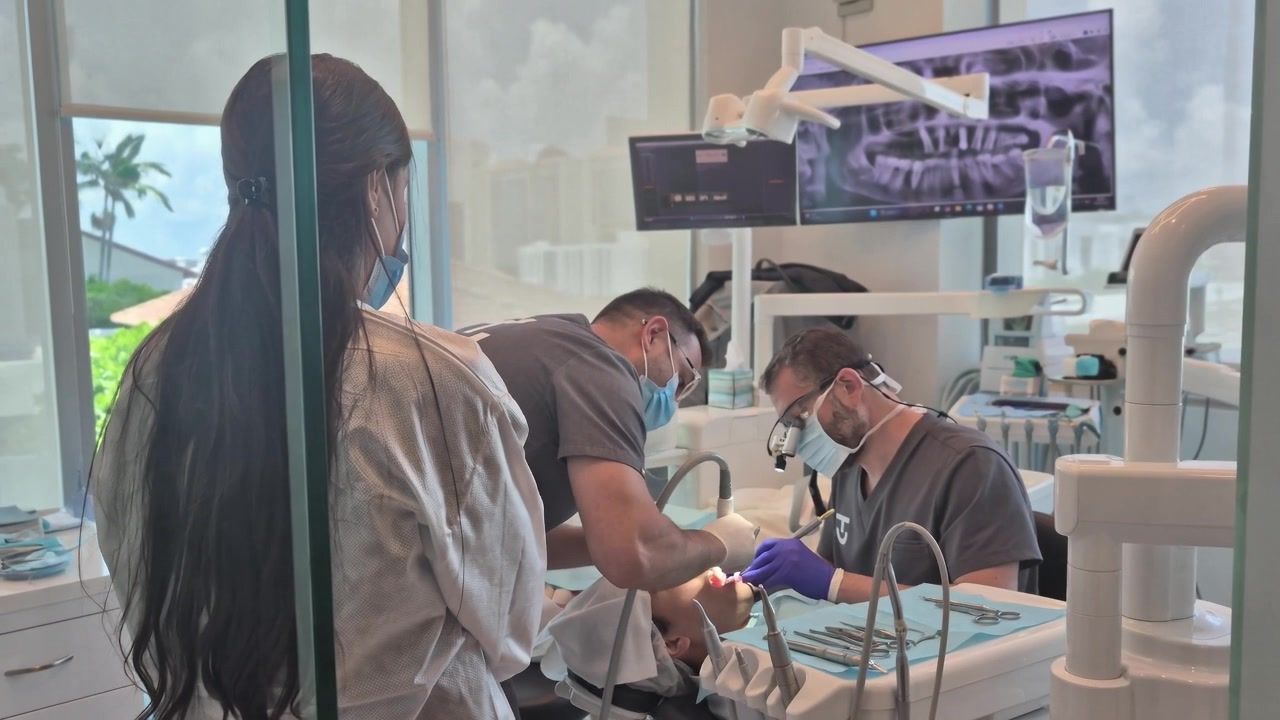
Dr. Baruch Tetri, DDS, is a periodontist (a dentist who specializes in the gums and the bone that hold teeth). He examines the whole mouth before any single tooth is repaired, because a filling placed beside inflamed gum or an unstable bite does not last. Fillings, onlays, crowns and bridges are done in our office; root canal treatment is also done in our office, by an endodontist (a root canal specialist).
Three habits run through every page in this section:
- Repair before replacement. A chipped filling can often be patched, and a sound silver filling is not removed because a newer material is in fashion.
- The smallest restoration that will hold. A filling, an onlay, a crown and a bridge do different jobs; more coverage is not automatically more protection, because preparation itself removes tooth.
- Gum and bite first. Pain, lingering cold sensitivity, a deep crack or loose gum support can change the plan before it starts.
Choose your treatment
- Tooth-colored fillings (/fillings) — decay, chips and worn edges, repaired in one visit.
- Inlays and onlays (/inlays-onlays) — a laboratory-made partial crown when a filling is too small and a crown is too much.
- Dental crowns (/crowns) — a cap for a tooth that has lost too much to hold a filling.
- Dental bridges (/bridges) — a fixed replacement for a missing tooth, compared with an implant.
- Root canal treatment (/root-canals) — when the nerve is inflamed or dead, before the tooth is rebuilt.
- Tooth extraction (/tooth-extraction) — when a tooth cannot be saved, and what replaces it.
When many teeth are involved, the work is sequenced as one plan rather than treated tooth by tooth → Dental implants (/dental-implants) · Full-mouth rehabilitation (/full-mouth-reconstruction) · Digital smile design (/smile-makeover) · Periodontal care (/periodontal-surgery).

Risks and limits
- Every restoration has a lifespan; fillings, crowns and bridges are repaired or remade over the years, and we say so at the start.
- Watching a tooth instead of treating it is also a decision, and it carries a review date that we write down.
- A restoration cannot settle an unresolved nerve or gum problem; those are treated first or the repair fails.
- Rebuilding worn teeth changes the bite, but it does not by itself establish the cause of jaw pain, headache or grinding.
Questions patients ask
Do my old fillings need replacing?
Only if they are cracked, leaking or have decay underneath. Age alone is not a reason.
How do I know how big the repair needs to be?
We show you the tooth on the screen and on the X-ray and explain what is left to work with. If a filling will hold, we do not suggest a crown.
Can everything be done at once?
Small repairs often can, in one or two visits. When the gum is inflamed or the bite is unstable we treat that first, because a restoration placed on a moving foundation does not last.
Sources
- ADA: Restorative treatments for caries lesions
- FDI: Repair of restorations
- ADA MouthHealthy: Dental filling options
- FDA: Dental amalgam fillings
- ACP/ADA: Recall and maintenance of dental restorations
Request a visit
Tetri’s Smile · 16690 Collins Avenue, Suite 701, Sunny Isles Beach, FL 33160