Who this is for
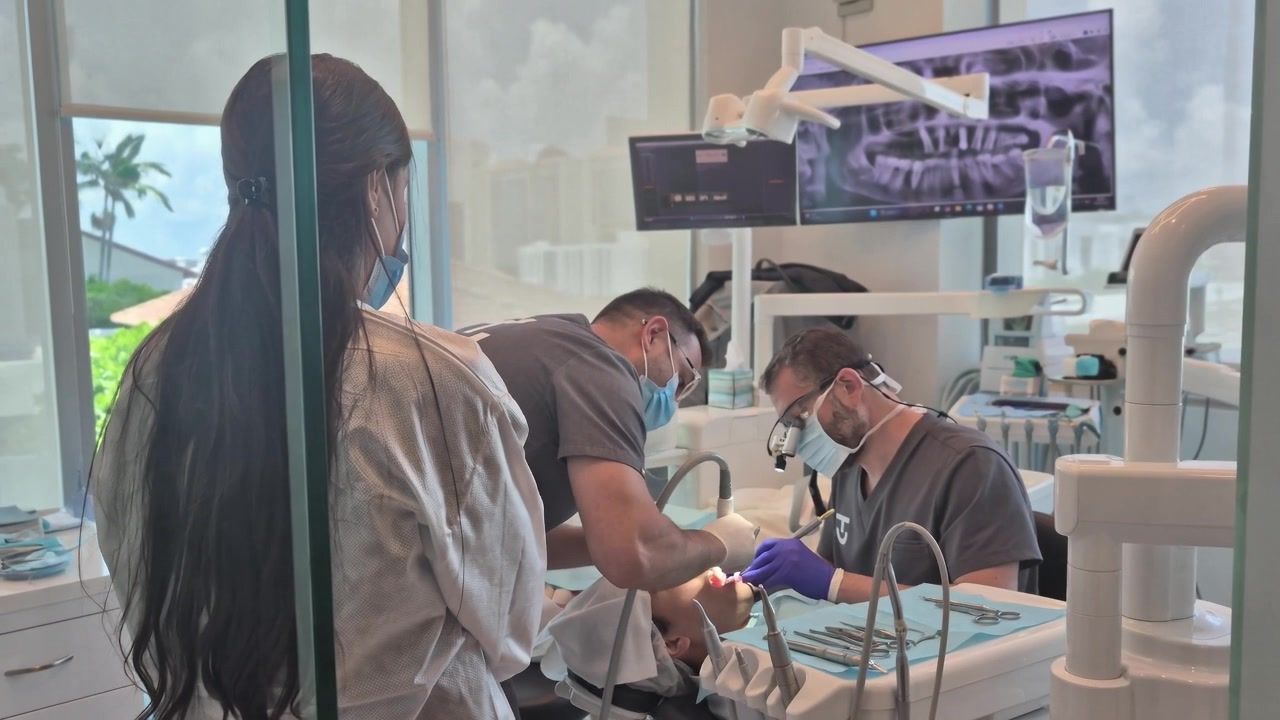
- You are missing one tooth or several, or you need implants to anchor a denture.
- You have been told a tooth cannot be saved and want to know whether that is true before it is removed.
- You have a loose or failing implant placed elsewhere.
What we do at our office
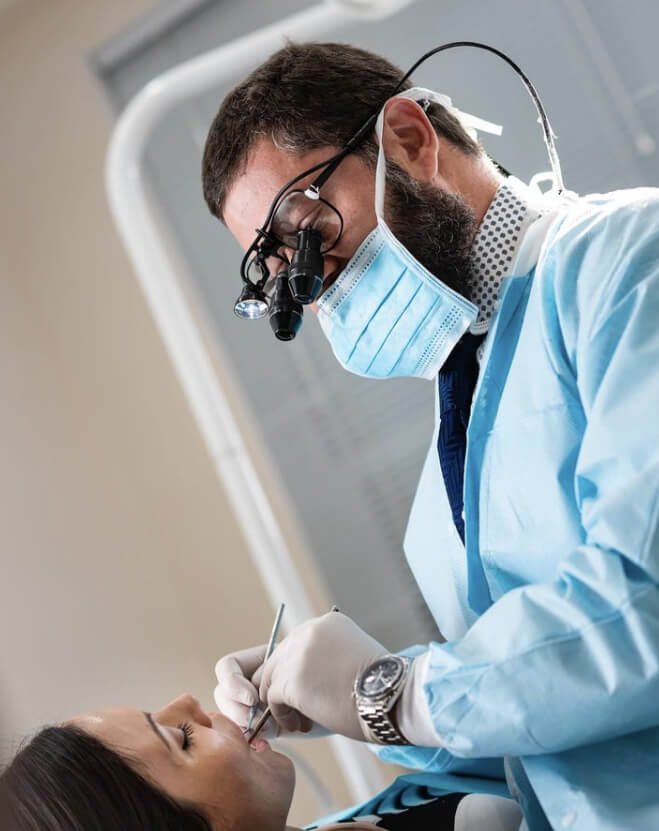
Dr. Baruch Tetri, DDS, is a periodontist (a dentist with specialty training in gums, bone and implants). He earned his DDS at NYU College of Dentistry in 2006, completed his Certificate in Periodontics in 2009, and is a Diplomate of the American Board of Periodontology. He places the implant and does any grafting in our Sunny Isles Beach office, and the crown is designed in our digital laboratory.
We begin by asking whether the tooth can be kept. A cracked, infected or heavily filled tooth is not automatically hopeless, so a root canal, a crown, a conventional bridge, a removable denture and no treatment for now are each weighed against an implant when they fit. The plan says what will be kept, what will be replaced, where the implant goes and why, and how you will keep it clean. Gum disease, smoking, diabetes, some medicines and whether you will come back for checkups change the plan, and sometimes its order, more often than they change the answer.
If surgery worries you, we go through sedation options after a medical review, where our permits and team allow.
What happens at the visit
- The exam. We look at the tooth or the gap, the gums, the neighboring teeth and your bite, and we go through your medical history and medicines.
- The plan. Where the finished tooth should sit and how it meets the opposite teeth decide where the implant goes. A CBCT scan (a three-dimensional dental X-ray) shows the bone, the nerve and the sinus before surgery.
- Grafting, if needed. Where the bone or gum is too thin, we rebuild it with a graft or a sinus lift (lifting the floor of the sinus to make room for bone in the upper back jaw). That adds healing time, and we tell you how much before you start.
- Placement. Under local anesthetic, the implant goes in during a short visit. A temporary tooth the same day is possible only when the implant is firm enough once it is in; we decide that during surgery, not before.
- Healing and the final tooth. The bone bonds to the implant over a few months. Then we take records (a digital scan and a bite record) and make the crown.
- Checkups. Implants can get gum disease too, so they need the same cleanings and checkups as teeth; that part belongs to everyday care.
Risks and limits
- Surgery means soreness, swelling and bruising for a few days, and sometimes bleeding or infection.
- An implant can fail to bond with the bone, early or years later. It is then removed and the site is reassessed.
- The gum around an implant can become inflamed or infected (peri-implantitis), most often with smoking, poor cleaning or untreated gum disease.
- Altered feeling in the lip or chin after a lower implant is uncommon; we measure the distance to the nerve on the scan before surgery.
- Crowns and the small screws inside them can loosen, chip or wear. Repairs are part of owning an implant.
- Nothing we place lasts without upkeep.
Questions patients ask
Does it hurt?
The surgery is done under local anesthetic. Expect soreness and swelling for a few days afterward; you go home with written instructions and a number to call.
How long does it take from start to finish?
A simple case with no grafting takes a few months from placement to final crown. Grafting adds to that.
Can I have the tooth the same day?
Sometimes. The implant has to be firm enough when placed, the bite has to protect it and there can be no infection. We can say it is possible before surgery and only say yes during it.
What does it cost?
The fee depends on the number of implants, any grafting and the kind of tooth.
Sources
- FDA: Dental implants — what you should know
- American Academy of Periodontology: Dental implant procedures
- ADA and AAOMR: Patient selection for dental X-rays and CBCT
- EFP S3 guideline: Prevention and treatment of peri-implant diseases
- ITI consensus: Implant placement and loading protocols
Request a visit
[Request a visit](/book) · Call 786-320-5445