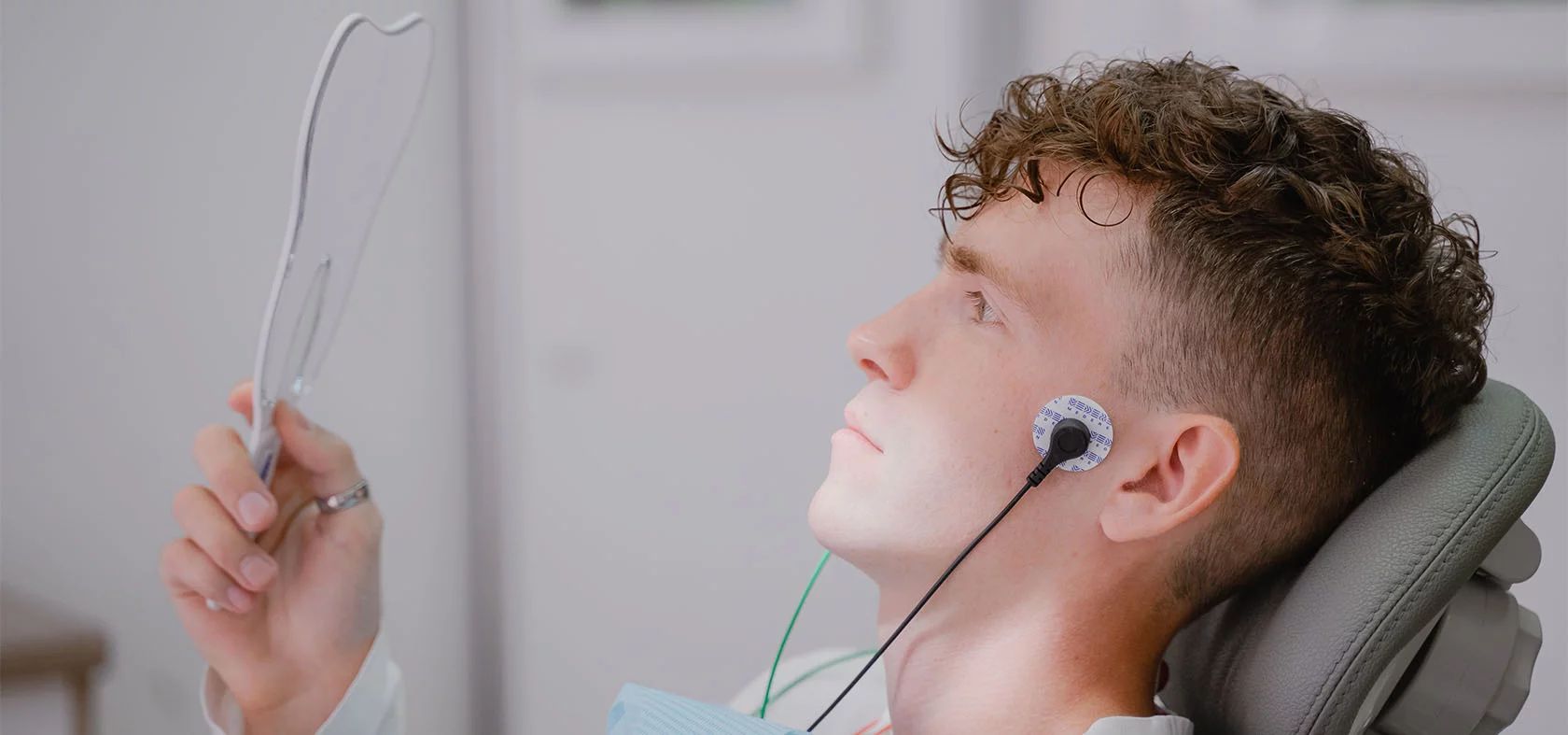
Who this is for
- Flattened, chipped, cracked, sensitive or repeatedly repaired teeth that need a cause before the next repair.
- Tired or tender chewing muscles, jaw or head symptoms on waking, or daytime clenching you have noticed yourself.
- Grinding reported by a partner, a question about a night guard, or extensive dental work that needs protecting.
What we do at our office
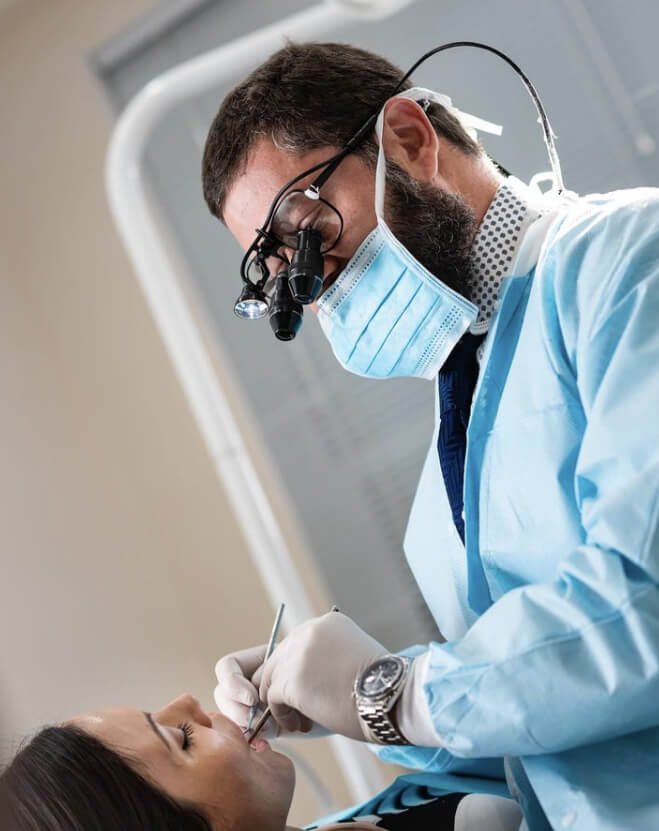
Dr. Baruch Tetri examines you and plans any protection or repair himself. A night guard (an occlusal splint: a custom-made plastic appliance worn over the teeth, usually at night) is made from a digital scan taken in our office and finished by our laboratory. Repairs, from a small bonded filling to crowns or onlays (partial crowns), are done here. If a medicine may be contributing, we talk to your physician; we do not change prescriptions ourselves.
What happens at the visit
- We separate the patterns. Your account, a partner’s observations, the timing of symptoms and the examination distinguish daytime clenching from sleep grinding, and both from other causes of wear or pain.
- We look at the damage. Tender chewing muscles, cracks, chipped restorations, loose teeth, the pattern of wear, and marks on the tongue and cheeks.
- We review the contributors. Stress, sleep, caffeine, alcohol, tobacco, some medicines and medical or sleep conditions. No in-office gadget can tell you for certain whether you grind; sleep testing is for the cases where the answer would change care.
- We match care to the consequence. Awareness and habit strategies for daytime clenching, a night guard where teeth or restorations need protecting, a referral where a medical question is open, and repair of damaged teeth.
- We agree what "better" looks like before we start, then review symptoms, wear and the guard at follow-up, and adjust rather than assume.
Risks and limits
- A night guard separates and protects the teeth and can ease symptoms; it does not reliably stop grinding, and on its own it does not treat headache, facial pain, a jaw-joint disorder (TMD) or a sleep disorder.
- The guard is designed not to change your bite. We check it for fit and effect and reconsider it if it increases pain or alters how your teeth meet.
- Wear does not prove that grinding is active today, and the amount of wear on its own does not justify rebuilding the whole mouth.
- Restoring worn teeth does not remove the load on them. Extensive work adds its own risks: tooth reduction, sensitivity, fracture, decay, gum and nerve problems, and future repair or replacement. A protection and maintenance plan comes before definitive work.
- Sleep habits and stress affect grinding. Addressing them can help, but they are rarely the whole answer.
- A fractured tooth, swelling, fever, an injury, a sudden change in the bite, a jaw that will not open or close, severe or escalating pain or new numbness needs same-day assessment, not reading. During office hours call 786-320-5445.
Questions patients ask
Do I need a night guard? If grinding is damaging your teeth or restorations, or you wake with sore muscles, usually yes. If there is no damage and no symptom, often not, and we will say so.
Can you tell whether I grind at night? Not with certainty from the mouth alone. Wear, muscle tenderness and a partner’s report point to it; a sleep study is the reference test, and we arrange one when the answer would change care.
Should my worn teeth be rebuilt? Only what the findings justify. Small chips can be watched or bonded; cracks, sensitivity or failing restorations may need more. The bite evaluation page explains how a larger plan is tested before it is made.
Sources
- NIDCR: Bruxism
- International consensus: Assessment of bruxism
- Cochrane review: Occlusal splints for sleep bruxism