Who this is for
- Anyone afraid of the dentist, or whose past experience keeps them putting treatment off.
- Someone facing a long, surgical or complex visit: periodontal surgery, implants, wisdom teeth, a full-mouth plan.
- A patient who wants to understand the levels, the preparation, the escort rule and the risks before agreeing to anything.

What we do at our office
Dr. Baruch Tetri reviews your medical history and the planned procedure and recommends a level, or none.
What happens at the visit
- We name the benefit. What you hope sedation will do: calm the fear, get you through a long visit, leave you with little memory of it. We say what is realistic for you.
- We review your health. Current and past conditions, every medicine and supplement, allergies, past reactions to anesthesia, airway and sleep-breathing concerns, pregnancy where relevant. Some findings mean a different level, a different setting, or no elective sedation.
- We agree the level. Before you consent you know the intended depth, who administers it, who monitors you, and whether our office or a colleague’s facility is the right setting for it.
- You get written instructions: fasting if required, which of your usual medicines to take, and the escort rule. Do not guess or copy another patient’s fasting plan; call us if anything is unclear or your health changes before the day.
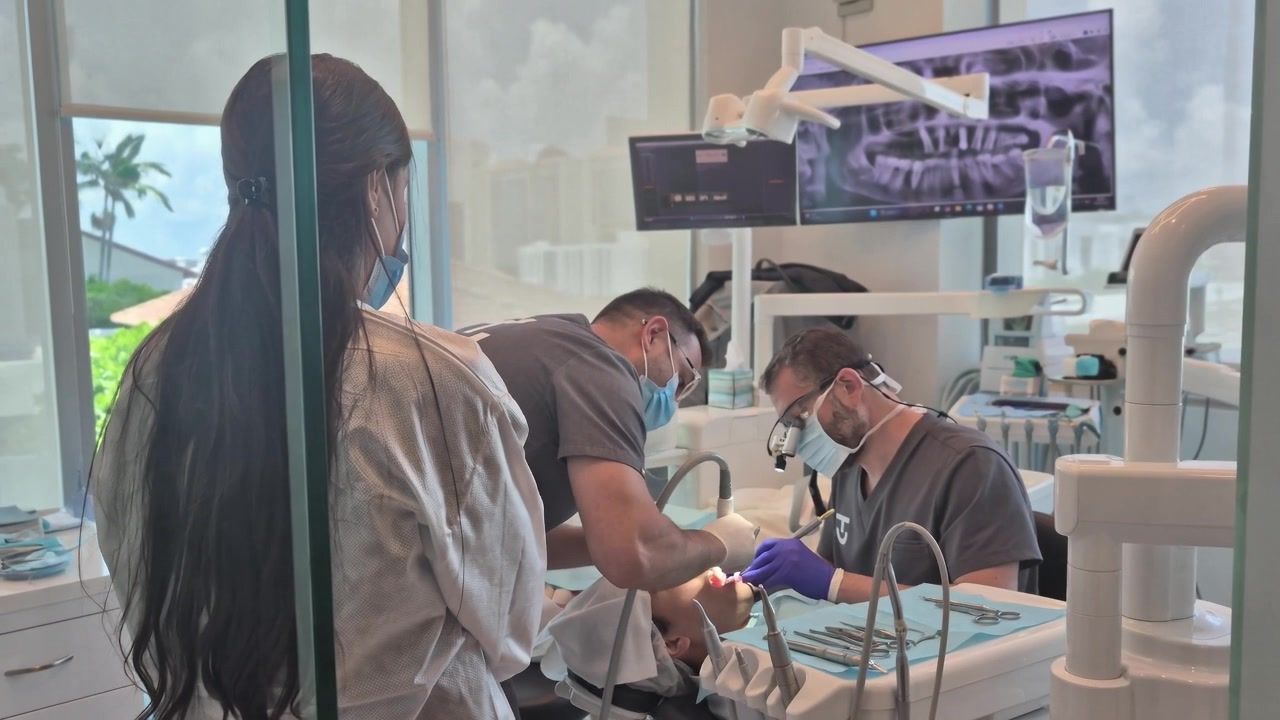
- During treatment a trained team member monitors you throughout, and the rescue equipment and medicines the planned level requires are in the room. A patient can drift deeper than intended, and we must be ready for that.
- You stay until you meet discharge criteria, then leave with your escort and written instructions for the rest of the day.
Risks and limits
- Sedation eases fear and makes a long visit easier to tolerate. It does not promise sleep, no memory, no discomfort or faster healing; response is individual.
- Local anesthesia controls pain at the site during treatment; sedation does not. Pain after surgery is planned separately, with written aftercare.
- Possible effects range from nausea, grogginess or a slower recovery to slowed breathing, airway obstruction, blood-pressure changes, allergic reactions and, rarely, transfer to a hospital.
- You must have an adult escort, and you cannot drive, work or make important decisions for the rest of the day.
- Alternatives exist: local anesthesia alone, non-drug support for anxiety, shorter staged visits, or treatment in another facility.
Questions patients ask
What are the levels of sedation?
Minimal: you are relaxed and still talking. Moderate: drowsy, and you answer when spoken to. Deep: asleep, and you may need help keeping your airway open. General anesthesia: fully unconscious. Response can cross from one level into the next, which is why monitoring and rescue training are part of every plan.
Is oral sedation lighter than IV sedation?
Not necessarily. The route (a pill, a gas, a drip) does not fix the depth; the dose, the timing, the combination of drugs and your own response do. Ask what depth is intended, not just which route.
Will I be asleep? Will I remember anything?
With minimal and moderate sedation you are not asleep, though many people remember little of the visit. We do not promise sleep or amnesia; we say what is likely at the level planned for you.
Can I eat before my appointment?
It depends on the level. You get written fasting instructions for your own plan, and you keep taking your regular medicines unless we tell you otherwise.
Who takes me home?
A responsible adult must come with you and stay with you afterward. We confirm the escort before the appointment, not on the day.
Related under Complex care: Wisdom teeth removal · Periodontal care and surgery · Dental implants · Full-mouth rehabilitation.
Sources
- ADA: Anesthesia and sedation resource center
- Systematic review: Managing fear and anxiety during dental treatment (2023)
- Florida Administrative Code: Dental anesthesia rules
- Florida Board of Dentistry: General-anesthesia and deep-sedation permits
- ASA: Sedation and anesthesia in dental office-based settings