Who this is for
- A teen or adult with crowding, gaps, a crossbite (upper teeth biting inside the lower), an open or deep bite (front teeth that leave a gap when the back teeth close, or overlap too deeply), or an impacted tooth (one stuck under the gum) that needs guiding into place.
- Someone preparing for a crown, an implant or veneers whose teeth have to move first so the final result has room.
- A patient comparing braces with Invisalign treatment who wants the tradeoffs explained before choosing.
What we do at our office
Dr. Baruch Tetri, DDS, is a periodontist. He earned his DDS at NYU College of Dentistry in 2006, completed his Certificate in Periodontics in 2009, and is a Diplomate of the American Board of Periodontology. A periodontist specializes in the gums and bone that hold the teeth, so before any tooth is moved here we confirm the gums are healthy and the bone support sound; moving teeth through active gum disease does lasting harm. The diagnosis comes first; the appliance comes second.
Dr. Tetri places and adjusts fixed braces himself, in our office; where clear aligners suit the case, we prefer them. When a case needs jaw surgery or another specialist, we say so and refer; the periodontal side of the plan stays with us.
We also provide Invisalign treatment for teens and adults; many people who ask about braces are good candidates, and we show you both against your own records.
What happens at the visit
- We listen first: what bothers you about your teeth, what you want to change, and what you want left alone.
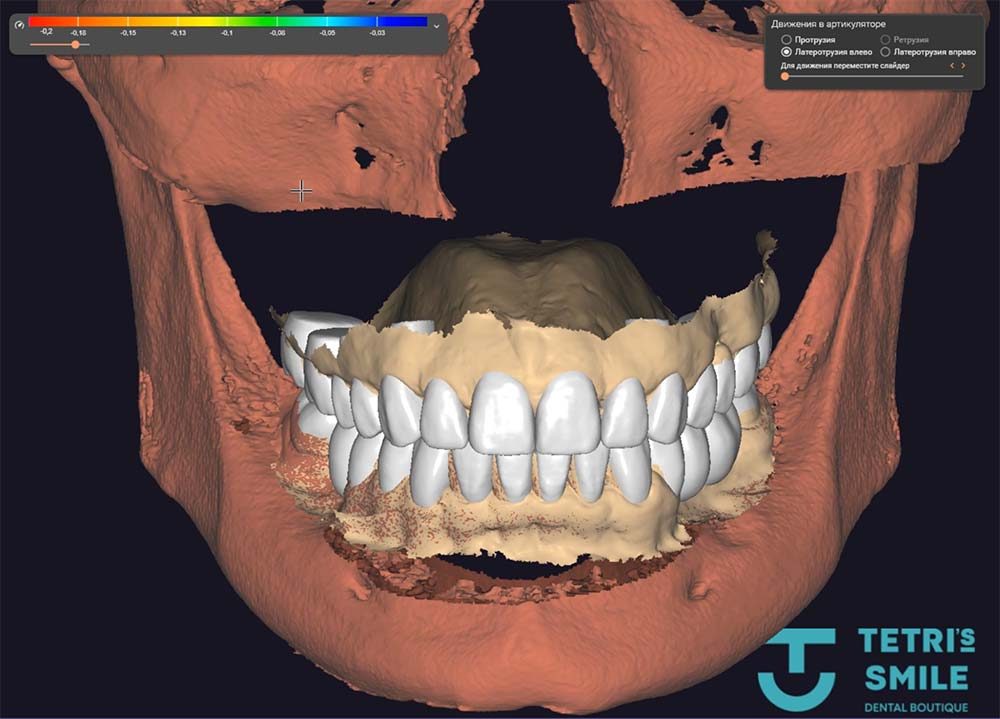
- We examine your teeth, gums and bite and review the X-rays you already have. A CBCT (a three-dimensional dental scan) is taken only for a defined question, such as where an impacted tooth sits.
- Decay, bleeding gums and gum disease are treated first; brackets make cleaning harder, so the mouth has to be healthy going in.
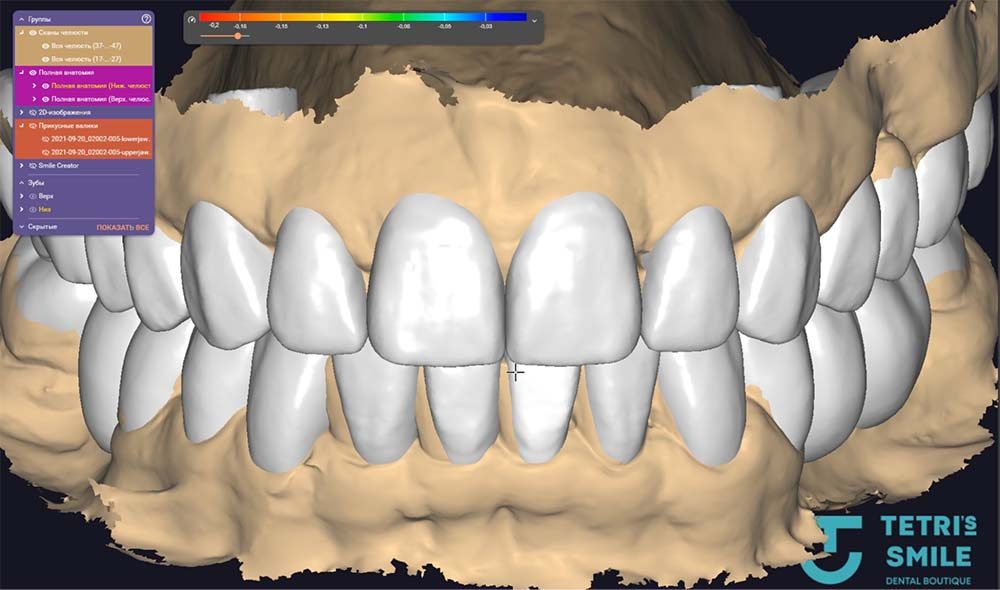
- We plan the movement with you: which teeth move, how far, how any space will be made, and what the finished bite should look like. Metal and tooth-colored (ceramic) brackets are shown side by side.
- The brackets are bonded and the first wire placed. You leave with cleaning instructions, a list of foods to avoid, and our number.
- Adjustment visits every six weeks check movement, gums and enamel. When the agreed result is reached, the braces come off and retainers begin; teeth drift throughout life, and retainers worn as prescribed are the only way to hold the result.

Risks and limits
- Teeth are usually sore for a few days after each adjustment; over-the-counter pain relief is normally enough. The number of adjustments, and so the treatment time, is an estimate; growth, missed visits, broken brackets and your own biology all change it.
- Plaque collects around brackets. Without careful daily cleaning, chalky white marks (early enamel loss) and cavities can form and remain visible afterward.
- Gums can bleed, swell or recede, especially where the tissue is thin; we check at every visit and pause movement if the gums need care.
- Roots can shorten slightly during movement (root resorption); usually minor, it cannot be fully predicted or prevented.
- Braces move teeth. They do not treat jaw-joint pain, headaches, snoring or sleep apnea.
Questions patients ask
Braces or Invisalign treatment: which is right for me?
Neither wins in general. Braces give continuous control and do not depend on remembering a tray; aligners are removable, less visible and easier to clean around. Some movements, such as rotating a round tooth or bringing down an impacted canine (an eye tooth stuck in the gum), are more predictable with braces.
What if a bracket comes off or a wire pokes my cheek?
Call 786-320-5445 during office hours and we will fit you in; most loose brackets and poking wires are a nuisance, not an emergency. Cover a sharp end with orthodontic wax, and do not cut, bend or glue anything yourself.
I have gum disease. Can I still have braces?
Often, yes, once the disease is under control and stable. Because Dr. Tetri is a periodontist, that part of the plan happens in the same office, with lighter forces and closer monitoring.
Sources
- American Association of Orthodontists: How braces work
- American Association of Orthodontists: Orthodontic emergencies
- ADA/AAOMR: Patient selection for dental radiography and CBCT
- EFP: Stage IV periodontitis treatment guideline
- Cochrane: Preventing early tooth decay during fixed-brace treatment
- Systematic review: Root resorption with orthodontic tooth movement
Request a visit
Tetri’s Smile · 16690 Collins Avenue, Suite 701, Sunny Isles Beach, FL 33160