Who this is for
- A check-up or an X-ray has found a cavity.
- A corner of a tooth has chipped, or an old filling has cracked, stained or fallen out.
- A tooth is sensitive to sweet or cold and you want to know why before anything is drilled.

What we do at our office
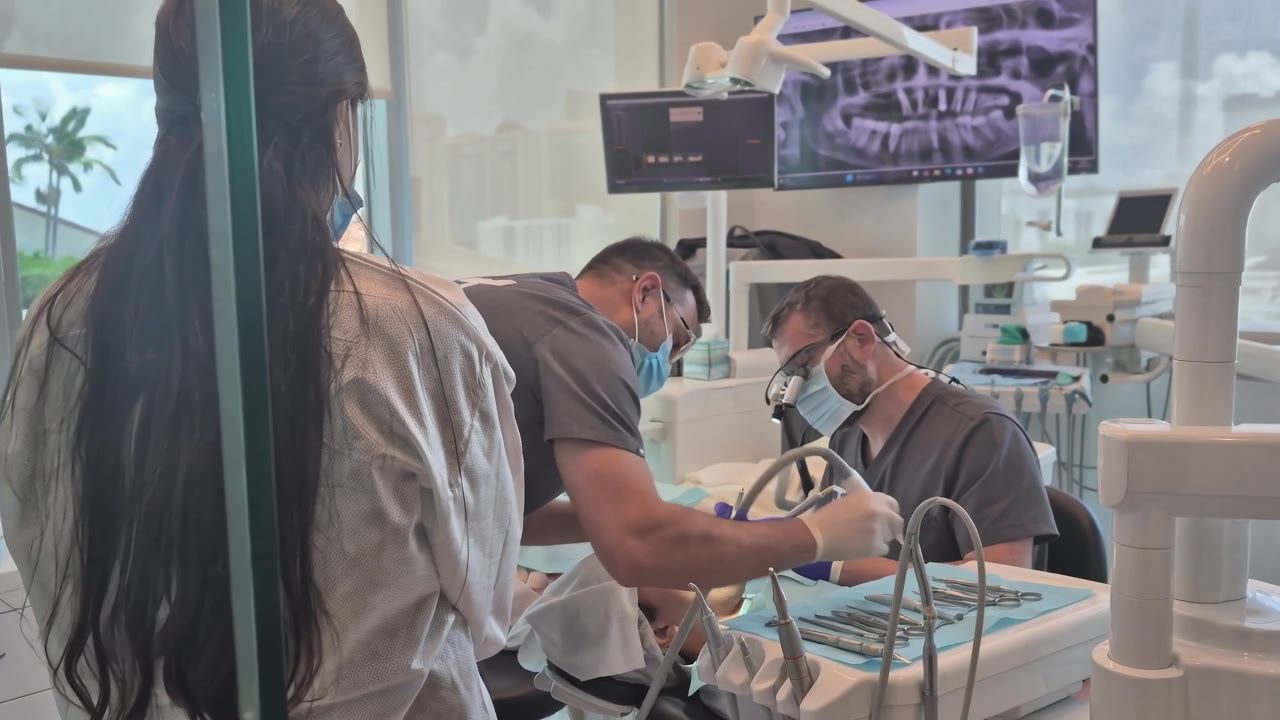
Fillings are placed in our office. We place tooth-colored composite fillings.
Not every dark spot needs a filling. An early lesion that has not broken the surface can often be halted with fluoride and better cleaning, and we check it again at your next visit instead of drilling it.
What happens at the visit
- Diagnosis. We look, probe gently and take an X-ray if the decay is between the teeth. We tell you whether the spot is active, whether it can be watched, and whether a filling, an onlay or a crown fits the damage.
- Numbing. The tooth is numbed first. Most people feel pressure and vibration rather than pain; tell us if anything hurts and we stop and add more anesthetic.
- Removing the decay. We take out the decay and any failed filling and leave the sound tooth. In a deep cavity we may deliberately leave a thin layer of softened dentin (the layer under the enamel) over the nerve, because scooping it all out risks exposing the nerve.
- Placing the filling. The tooth is kept dry (we isolate it), the surface is conditioned, and the composite is bonded in thin layers, each set with a blue light. White fillings need a dry field, which is why the isolation matters.
- Shaping and the bite. We shape the filling, polish it and check your bite. A filling that feels high once the numbness wears off should be adjusted, not tolerated.
A single filling takes about 30 to 45 minutes.

Risks and limits
- Sensitivity to cold for a few days or weeks is common; pain that lingers, wakes you or comes on its own needs a look, because the nerve may be inflamed.
- A filling can chip, wear or stain, and decay can begin again at its edge.
- A deep filling may later need root canal treatment even when everything was done properly.
- A tooth with a large old filling can crack; past a certain size an onlay or crown holds better than a bigger filling.
- Composite is matched to your tooth; it is not invisible and it does not last forever.
Questions patients ask
Should I have my silver fillings replaced?
Not just because they are silver. The FDA advises against removing sound amalgam fillings, because removal takes more tooth with it. We replace a silver filling when it is cracked, leaking or has decay underneath.
Can a chipped filling be repaired instead of replaced?
Often, yes. A chipped corner or a worn edge can be repaired with new composite bonded to the old, which keeps more of the tooth.
How long does a white filling last?
Several years to well over ten, depending on its size, your bite and how well the edges are cleaned. Smaller fillings last longer.
What does a filling cost?
It depends on the size and the number of surfaces it covers. We do not accept dental insurance for adults; we discuss the fee with you after the examination.
Sources
- ADA: Restorative treatments for caries lesions—clinical practice guideline
- JADA systematic review: Direct restorative materials (2023)
- FDI: Repair of restorations
- FDA: Dental amalgam fillings
- Systematic review: Selective carious-tissue removal
Request a visit
Tetri’s Smile · 16690 Collins Avenue, Suite 701, Sunny Isles Beach, FL 33160