What it is
A dental laboratory converts an approved clinical prescription and patient record into a restoration; it does not diagnose the patient or make a machine-selected result. The useful workflow connects photographs, scans or impressions, implant-position records when relevant, tissue and tooth information, restorative space, appearance, speech, contacts, hygiene access, material requirements, and the treating clinician's instructions. Digital tools can improve communication and make design revisions visible, but accuracy depends on the complete chain: acquisition, compatible components, software, calibration, design, manufacturing, post-processing, verification, and clinical delivery. A scan, photogrammetry system, mill, printer, or material does not guarantee passive fit, appearance, comfort, speed, or longevity.
For
01
A complex crown, veneer, bridge, implant, or full-arch case that needs the clinical and laboratory plan coordinated from the beginning.
02
Someone comparing digital and conventional records and wanting to understand what each step contributes.
03
A patient who wants material, provisional-versus-definitive, fit, repair, and maintenance decisions explained before treatment.
01 — Prescribe and capture
The diagnosis and restorative objective determine which photographs, scans, impressions, bite records, implant records, shade information, and tissue details the laboratory needs.
02 — Design and review
The clinician and laboratory review contours, restorative space, contacts, hygiene access, material thickness, esthetics, speech, and the relationship to the planned surgery or existing anatomy.
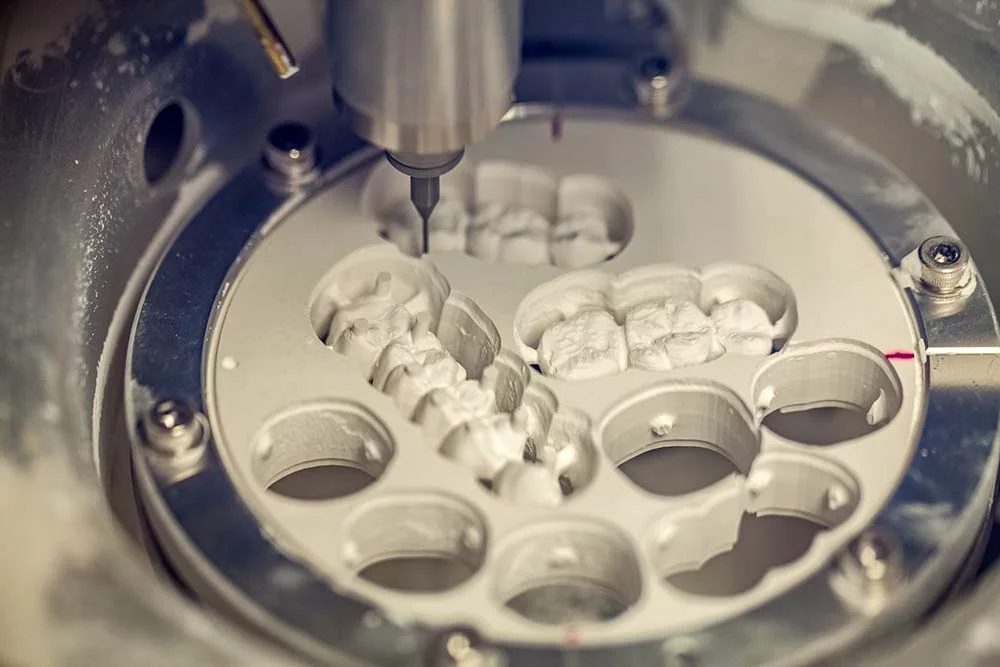
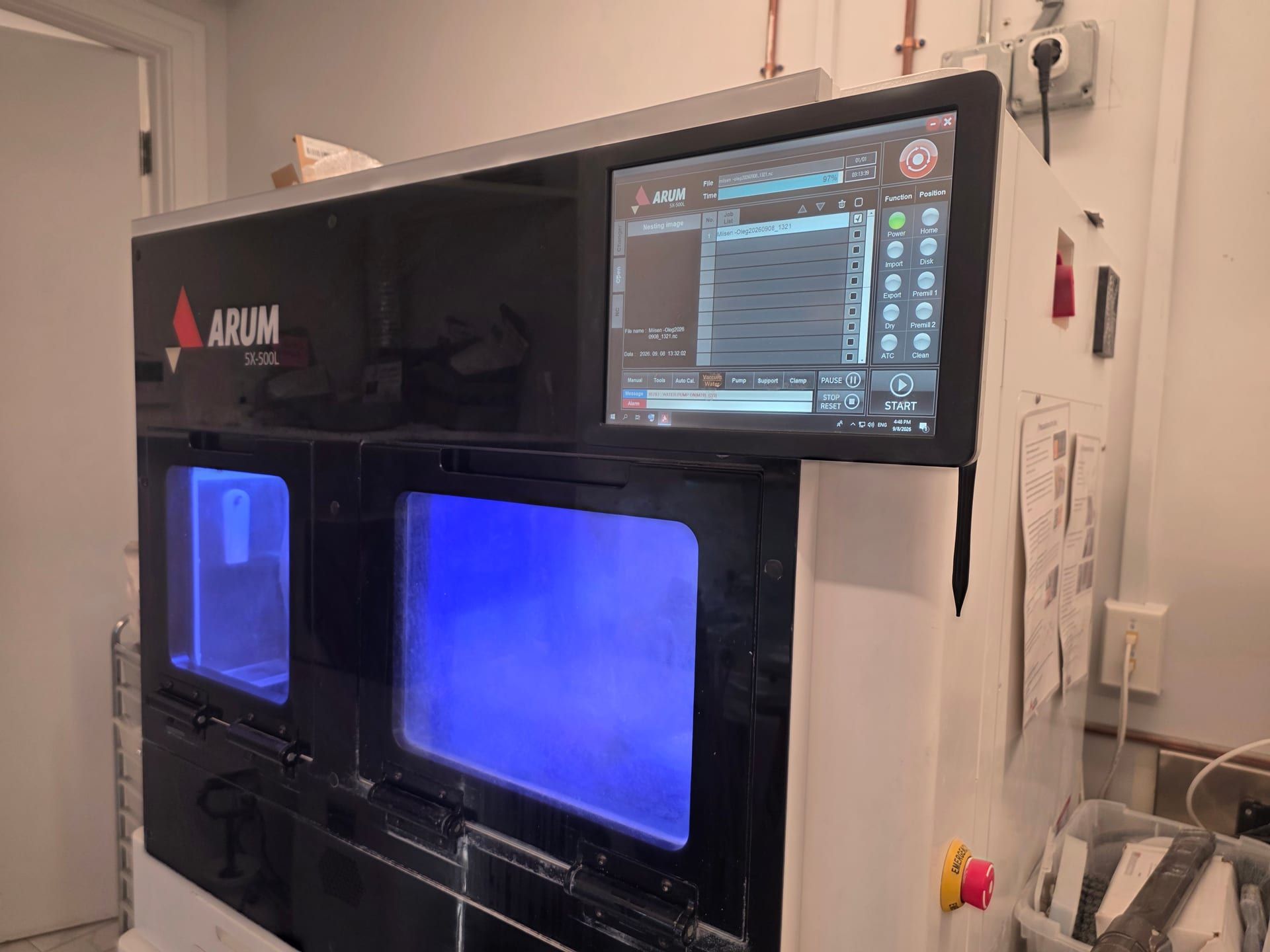
03 — Prototype or fabricate
A mock-up, verification device, provisional, or definitive restoration is produced according to the case, material instructions, validated equipment, and quality-control sequence.
04 — Verify and maintain
Fit, contacts, screws or cementation, tissue access, appearance, cleansability, and patient response are checked clinically; repair and maintenance remain part of the design.
Laboratory guide
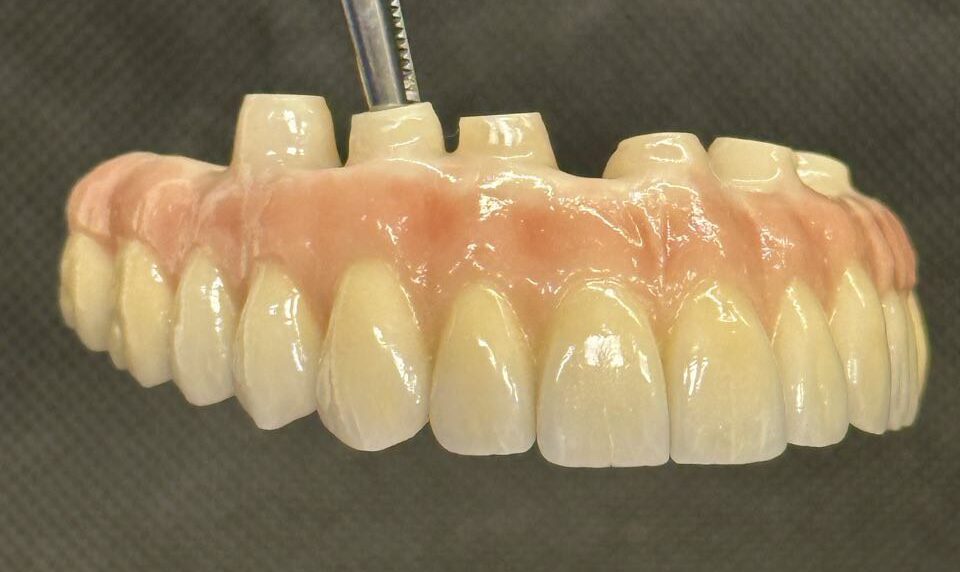
Digital shortens some handoffs. It does not remove judgment.
The value of a coordinated laboratory is not a list of machines. It is the ability to preserve clinical intent through every record, design decision, material step, verification, and future repair.
The prescription leads
The laboratory needs a clear diagnosis, tooth or implant plan, preparation and margin information, tissue condition, restorative space, contacts, shade and characterization, material request, and delivery objective. Missing clinical information cannot be corrected by adding more software.
Digital and conventional records can coexist
Intraoral scans, photographs, facial records, and digital design may be useful, while a conventional impression, verification index, physical model, or analog check may still be appropriate. Reviews do not support declaring one workflow universally superior for every restoration or arch.
Photogrammetry has a specific job
Stereophotogrammetry can record the three-dimensional relationships of implant components for selected multi-implant and complete-arch workflows. Recent reviews often report better accuracy than intraoral scanning in studied complete-arch conditions, but much of the evidence is in vitro, systems and methods vary, and a rigid verification step may still be recommended. It does not record soft tissue, appearance, vertical dimension, or the full restorative prescription by itself.
Design is a clinical-laboratory decision
Software can display contours, contacts, restorative space, proposed tooth position, and manufacturing constraints. The clinician remains responsible for the prescription and delivery; the laboratory contributes material and manufacturing expertise. A digital preview is a proposal, not proof of the final tissue response, color, speech, comfort, or function.
Material follows indication
Ceramics, zirconia, polymers, metals, composites, and provisional materials differ in strength, optical behavior, required thickness, bonding or connection, wear, polishability, repair, and evidence. The brand, formulation, lot, compatible components, processing instructions, and intended use require traceability. No single material is best for every patient or restoration.
Provisional is not definitive
A provisional restoration may support healing, appearance, speech, function, or evaluation while definitive decisions remain open. It can fracture, wear, loosen, stain, or require adjustment. Concentrated care may change the timing of steps, but it does not eliminate biological healing, verification, or the distinction between provisional and definitive work.
Quality control continues at delivery
The team may evaluate the identity of components and materials, design approval, manufacturing completion, surface and margins, contacts, fit, screw or cementation steps, radiographic or clinical verification when indicated, hygiene access, and documentation. Laboratory accuracy is not the same as clinically acceptable delivery.
Safety, repair, and maintenance
Items moving between the mouth and laboratory require documented cleaning and disinfection consistent with infection-control guidance and material instructions. Restorations need home care and professional review and may chip, fracture, loosen, wear, stain, debond, develop caries or tissue problems, or require adjustment, repair, remake, or replacement.
Continue the evaluation
Planmeca Viso G7 and CBCTHow three-dimensional imaging is selected, limited, interpreted, and connected to a clinical question.Full-arch implant rehabilitationWhere implant-position records, provisionalization, restorative design, hygiene, and maintenance meet.Clinical technologyThe technology stack, its intended roles, and the practice-verification standard for every named system.Clinical reading
General information only. Diagnosis, treatment, risks, alternatives, and expected recovery are individual and require a clinical evaluation.
- CDC: Dental laboratory infection-control guidance ↗
- Systematic review: Photogrammetry versus intraoral scanning ↗
- Systematic review: Digital and conventional workflow time and cost ↗
- Systematic review: CAD/CAM restorative materials ↗
A strong laboratory workflow can make decisions and handoffs more visible; the restoration still succeeds or fails through diagnosis, execution, verification, patient factors, and maintenance.
Request a visit