Who this is for
- You are planning an implant for a back upper tooth and the scan shows only a few millimeters of bone under the sinus.
- You want to know how a small lift differs from a larger one, and whether a shorter implant could avoid both.
- You have sinus trouble, a previous graft or a failed implant there and want a second opinion.
What we do at our office
The maxillary sinus is an air space above the upper back teeth, lined by a thin membrane; a lift raises that membrane a few millimeters and fills the space below with graft material that becomes bone over the following months.
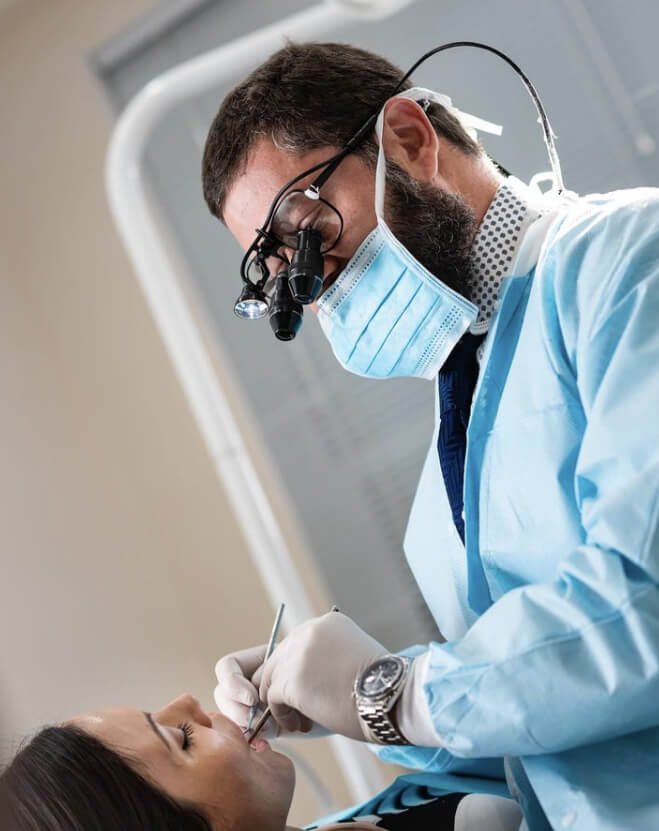
Dr. Baruch Tetri, DDS, is a periodontist. He earned his DDS at NYU College of Dentistry in 2006, completed his Certificate in Periodontics in 2009, and is a Diplomate of the American Board of Periodontology.
There are two approaches, and the scan chooses. A crestal lift is done through the hole prepared for the implant: the sinus floor is pushed up a few millimeters and the implant usually goes in the same day. A lateral window lift opens a small window in the side of the upper jaw to lift the membrane and place more graft; the implant goes in the same day if the remaining bone can hold it steady, otherwise after the graft matures.
A lift is not the only way: in the right site a shorter implant does about as well in the medium term with less surgery, and we put both options on the table. If you have chronic sinus symptoms, a blockage or previous sinus surgery, we may ask an ear, nose and throat physician to see you first. For a lateral window lift, IV sedation is available after a medical review, where our permits and team allow.
What happens at the visit
- Consultation. Dr. Tetri examines you and takes a CBCT scan (a three-dimensional dental X-ray) to measure the bone height and check the sinus for disease.
- A written plan. Which approach, which material, whether the implant is placed the same day, the alternatives, and the front desk’s written estimate.
- Surgery day. Local anesthesia, or sedation if we planned it; you leave the same day with your instruction sheet.
- The first two weeks. Do not blow your nose, sneeze with your mouth open, and no flying, diving, straws or heavy lifting for the period on your sheet. Take any antibiotic or nasal spray we prescribe as written.
- Healing. A crestal lift heals with the implant, usually four to six months; a lateral window graft matures for six to nine months before the implant is placed.
- The tooth, then maintenance. The crown is fitted once the implant has bonded to the bone; we watch the implant and the sinus at your check-ups.
Risks and limits
- The sinus membrane is thin and can tear during the lift; small tears are repaired on the spot, a larger one can mean stopping and returning after it heals.
- Swelling, a bruised cheek and a little nosebleed for a day or two are expected.
- Sinus congestion or infection can follow in the first weeks; it usually settles with medication.
- A graft can be lost or an implant can fail to bond; it is uncommon, and your plan says what we would do.
- Smoking and untreated sinus disease raise all of these risks; we address them before surgery.
Questions patients ask
Can I avoid a sinus lift?
Sometimes. A shorter implant, an angled implant using the bone in front of the sinus, or a bridge on neighboring teeth may suit your site; Dr. Tetri compares them on your scan.
Can I fly after a sinus lift?
Not for the period on your sheet, usually about two weeks; cabin pressure, diving and nose-blowing can all disturb the healing membrane.
Sources
Request a visit
Dr. Tetri sees you at our Sunny Isles Beach office, 16690 Collins Avenue, Suite 701, Sunny Isles Beach, FL 33160.