Who this is for
- Shape, proportion, localized wear, chips, spacing or discoloration that whitening, bonding or aligners cannot fix to your satisfaction.
- Someone weighing veneers against whitening, Invisalign® clear aligners, composite bonding, a crown, or no treatment.
- A patient with a problem on an old veneer, or who wants a second opinion on how much tooth a proposed plan would remove.
What we do at our office
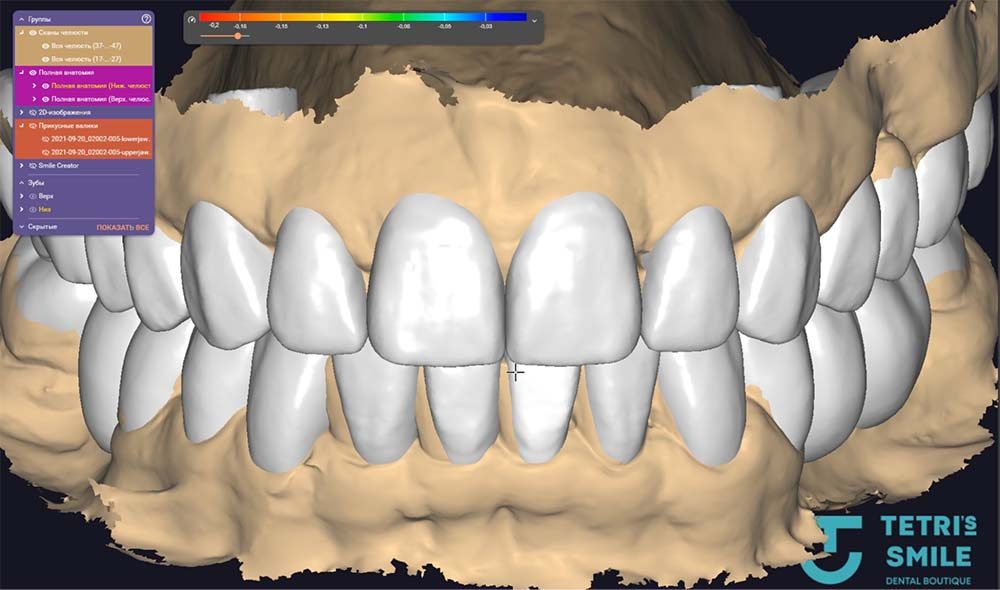
Dr. Tetri does the diagnosis, the preparation and the bonding. The ceramics are made by our laboratory from a digital design you see first as a trial mock-up. Which type of ceramic we use (there are several, and they differ in strength and in how much of the underlying tooth color they can mask) depends on the color we are covering and how much tooth we can keep; we tell you which and why. As a periodontist, Dr. Tetri plans the margin of each veneer with the gum, so the result can be kept clean. We can give you a reason for every surface we touch and every surface we leave alone.
What happens at the visit
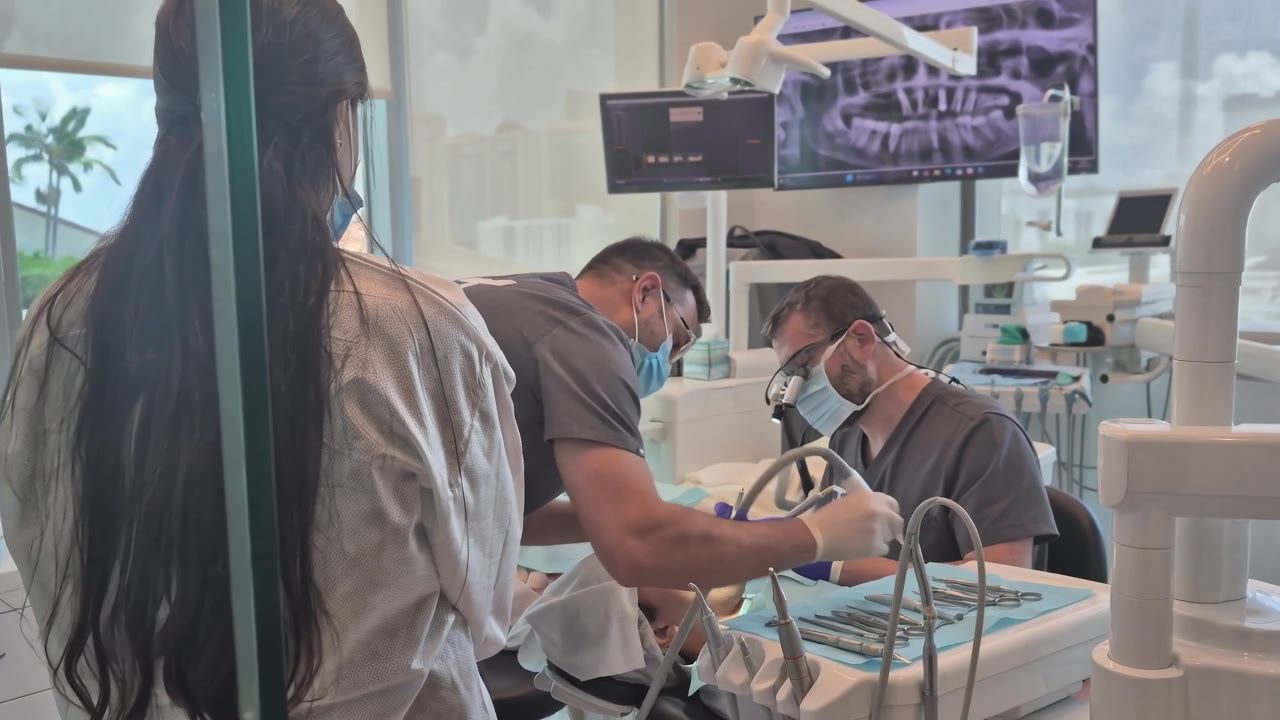
- Diagnosis before design. We check for decay, cracks, old fillings, gum health and recession, how much enamel is present, how your teeth meet, and whether you clench or grind.
- The alternatives, honestly. Whitening for color, aligners for position, bonding or contouring for small changes, a crown where more coverage is needed, and no treatment.
- The preview. Photographs, a digital scan, and a trial mock-up over your own teeth to judge length, shape and speech before any enamel is touched.
- Preparation and a try-in. Preparation is as conservative as the case allows and aims to stay within the enamel. The finished veneers are checked for fit, contour, shade and bite before they are bonded under a rubber dam (a thin sheet that keeps the tooth dry while the adhesive sets).
- Bonding and review. We check the margins, the bite and your access for cleaning at delivery and at a follow-up visit, then set a maintenance plan.

Risks and limits
- Enamel removal cannot be reversed; even a conservative preparation commits the tooth to lifelong maintenance.
- "No-prep" is a case description, not a promise; added thickness without space creates bulky contours and poor margins.
- Veneers bonded mostly to enamel hold better and fail less often than veneers bonded to exposed dentin (the softer layer under the enamel). That is why we preserve enamel, and why we tell you when a crown is the sounder choice.
- Veneers can chip, crack, debond, stain at the margins or need repair; decay and gum inflammation can occur around any restoration.
- Clenching, grinding and a deep bite raise the risk; a night guard is often part of the plan if you grind.
- Whitening does not lighten ceramic later, so the shade is decided before bonding, not after.
Questions patients ask
How long do porcelain veneers last?
Your own odds depend on enamel, bite, habits and hygiene.
Does it hurt?
Preparation is done under local anesthesia. Some sensitivity to cold for a few days afterward is common.
Veneer or crown?
A veneer covers the front surface and relies on bonding to enamel; a crown covers the whole tooth and needs more preparation. Cracks, large old fillings, heavy bite forces or too little enamel point toward a crown. We tell you which and why.
Can I whiten my teeth after veneers?
Whitening changes natural teeth, not ceramic. If you want a lighter shade, whiten first and we match the veneers to the result.
I have one chipped front tooth. Do I need veneers on all of them?
Not necessarily. One tooth can often be bonded or veneered alone. Matching a single ceramic to its neighbors is harder than matching a set, and we say so when we think a single-tooth repair is the better-balanced choice.
Related under Complex care: Smile design · Periodontal care and surgery · TMJ and bite · Full-mouth rehabilitation.
Sources
- ADA MouthHealthy: Veneers
- Systematic review and meta-analysis: Ceramic veneer survival and complications
- Systematic review and meta-analysis: Veneers bonded to enamel, dentin, or composite
- Systematic review: Long-term porcelain veneer survival
- Systematic review and meta-analysis: Veneer preparation and periodontal status