Who this is for
- Teeth or restorations (fillings, crowns, veneers) that wear, chip, crack or fail repeatedly and need a cause before the next repair.
- A bite that feels new or changed, or difficulty chewing, where the cause has to be found rather than assumed.
- A planned reconstruction (many crowns, veneers or implants) in which any change to tooth shape, position or contact must be justified and tested first.
What we do at our office
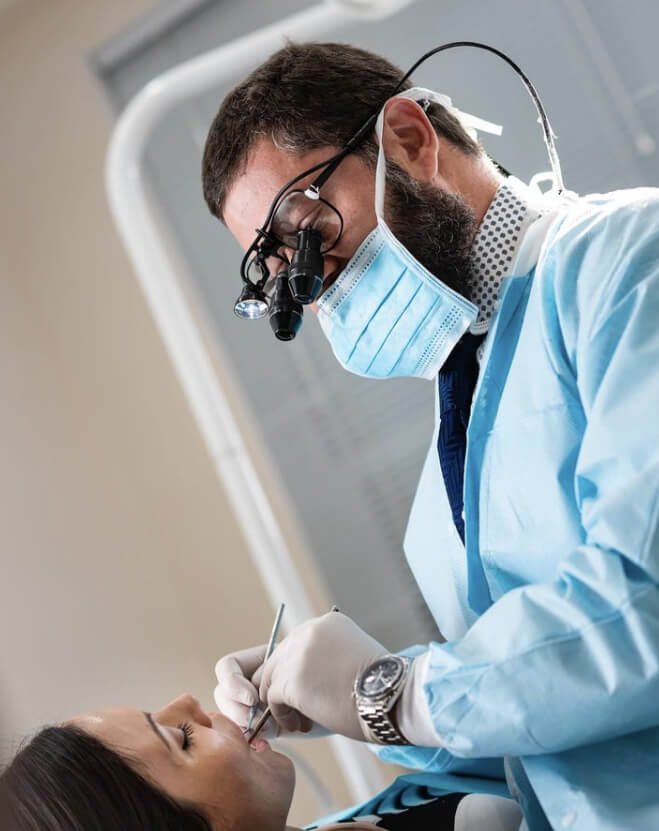
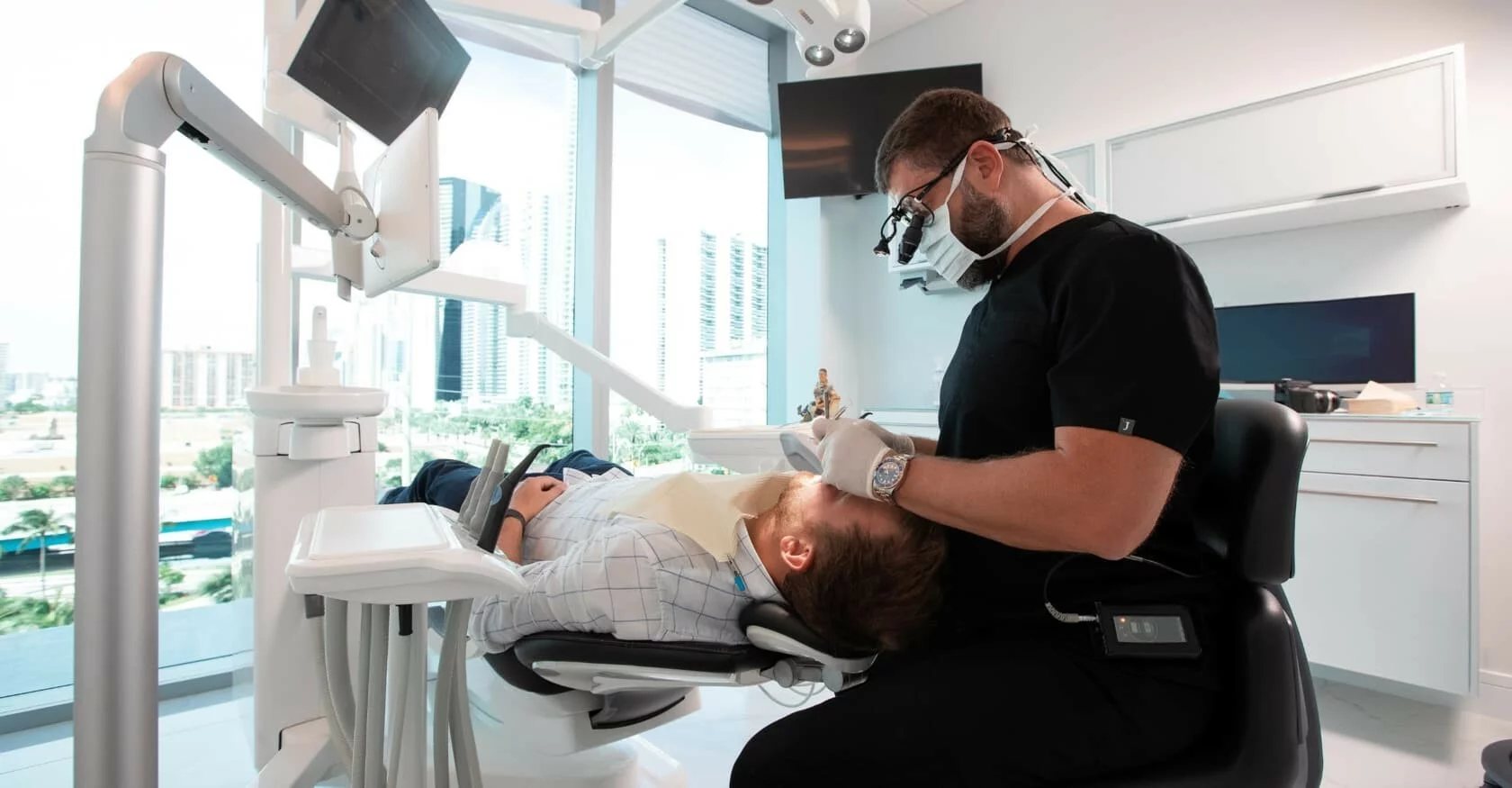
Dr. Baruch Tetri examines you and plans the work himself. The records are made in our office: photographs, a digital scan, bite records and, when a question needs it, a CBCT scan (a three-dimensional dental X-ray). Mock-ups (a trial version of the new tooth shapes placed over your own teeth), trial appliances and temporary restorations are made by our laboratory, and the definitive crowns, onlays (partial crowns) or veneers (thin porcelain facings) are placed by Dr. Tetri.
What happens at the visit
- We name the problem. The history and examination separate tooth wear, fracture, failing restorations, loose teeth, pain and a changed bite, instead of calling all of them a bite disorder.
- We find the cause of the wear. Tooth-to-tooth contact, acid erosion (reflux, diet), abrasion, a dry mouth, old habits and failing restorations often overlap. The shape of the wear alone does not prove that you grind now.
- We record with purpose. Photographs, scans, bite records and imaging are taken only when they can answer a question or change the plan.
- We compare the options. Monitoring, controlling the risk factors, repair, additive restorations (building a tooth up rather than cutting it down), orthodontics, replacing failing work, or a larger reconstruction. We choose the most conservative option that will do the job, and tooth reduction is limited to what the diagnosis and the material need.
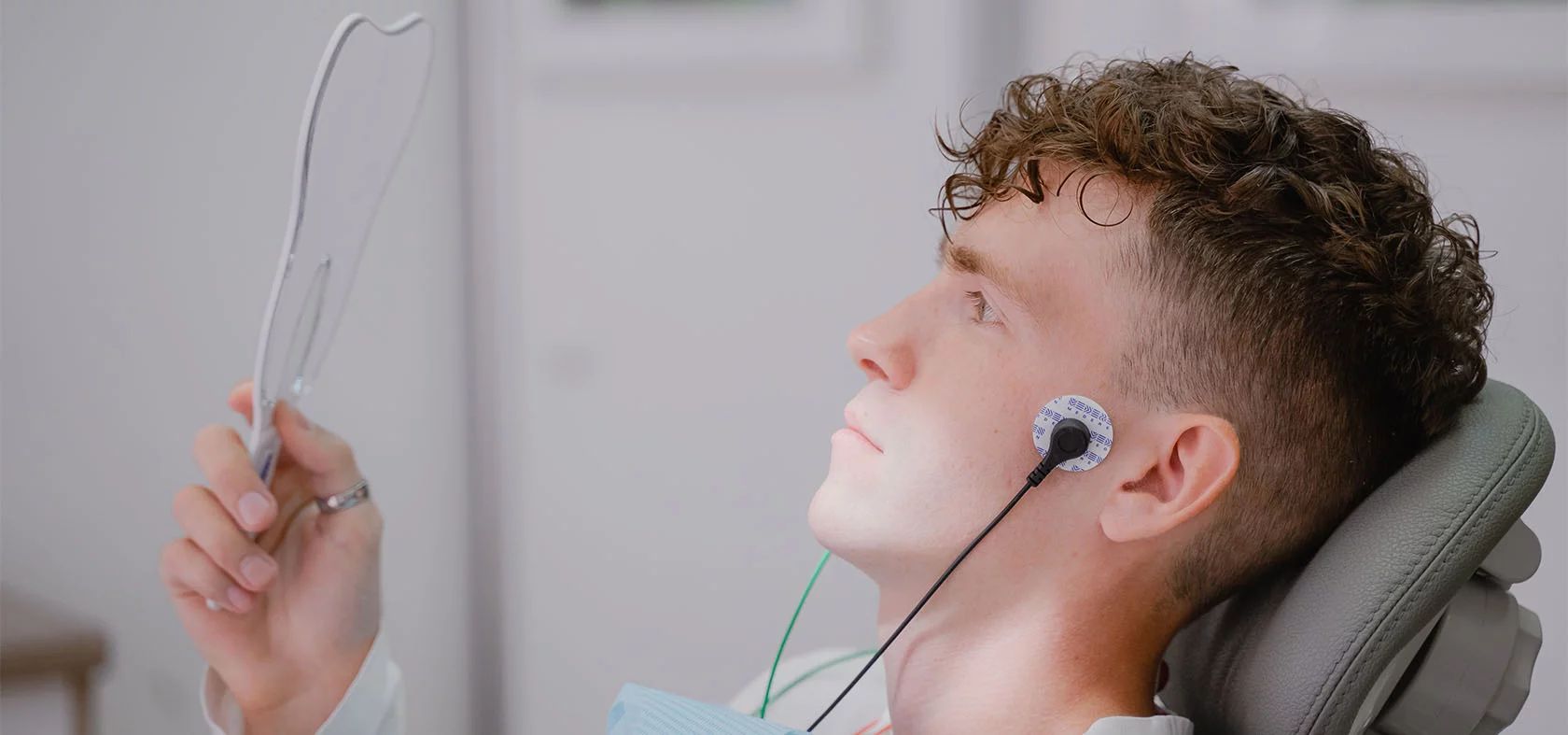
- We test before committing. When the plan changes how many teeth meet, you wear the design first, as a mock-up, a trial appliance or temporary restorations, and we judge speech, comfort, hygiene and appearance before the definitive work.
Risks and limits
- Changing how the teeth meet can be necessary to rebuild lost structure, replace failing work, make the teeth more stable or create room for restorations. That reason is documented on its own, separately from any claim that the bite caused jaw pain.
- NIDCR, the National Institute of Dental and Craniofacial Research, advises against irreversible bite-changing procedures as a routine treatment for TMD (temporomandibular disorder, the jaw-joint and jaw-muscle conditions behind most jaw pain), because the evidence of benefit is insufficient and symptoms can worsen.
- A trial phase is a planning step, not a preview of the outcome; there is no strong evidence that it predicts the final result.
- Irreversible treatment carries risks: tooth reduction, sensitivity, damage to the nerve of a tooth that can need root canal treatment, fracture, decay, gum problems, altered contacts and muscle or joint symptoms, and future repair or replacement.
- Even extensive work is still teeth and ceramic; it can wear, chip and need repair. Home care, professional review, a protective appliance when it is indicated and a plan for repairs are part of the design.
Questions patients ask
Do I need a bite evaluation before veneers or implants? When the plan changes how many teeth meet, yes; a single crown or filling usually does not need one.
Will I get used to a new bite? Most people do when the change is modest. Testing first lets us judge speech, comfort and appearance before the final work, but it does not settle how you will adapt. If you do not, we look for the reason rather than adjusting again and again.
My teeth are worn. Does that mean I grind? Not necessarily. Wear can come from acid, abrasion or a habit that stopped years ago; the bruxism and tooth wear page covers how we tell them apart.
Sources
- NIDCR: Temporomandibular disorders
- Cochrane review: Occlusal interventions for TMD
- European consensus: Management of severe tooth wear