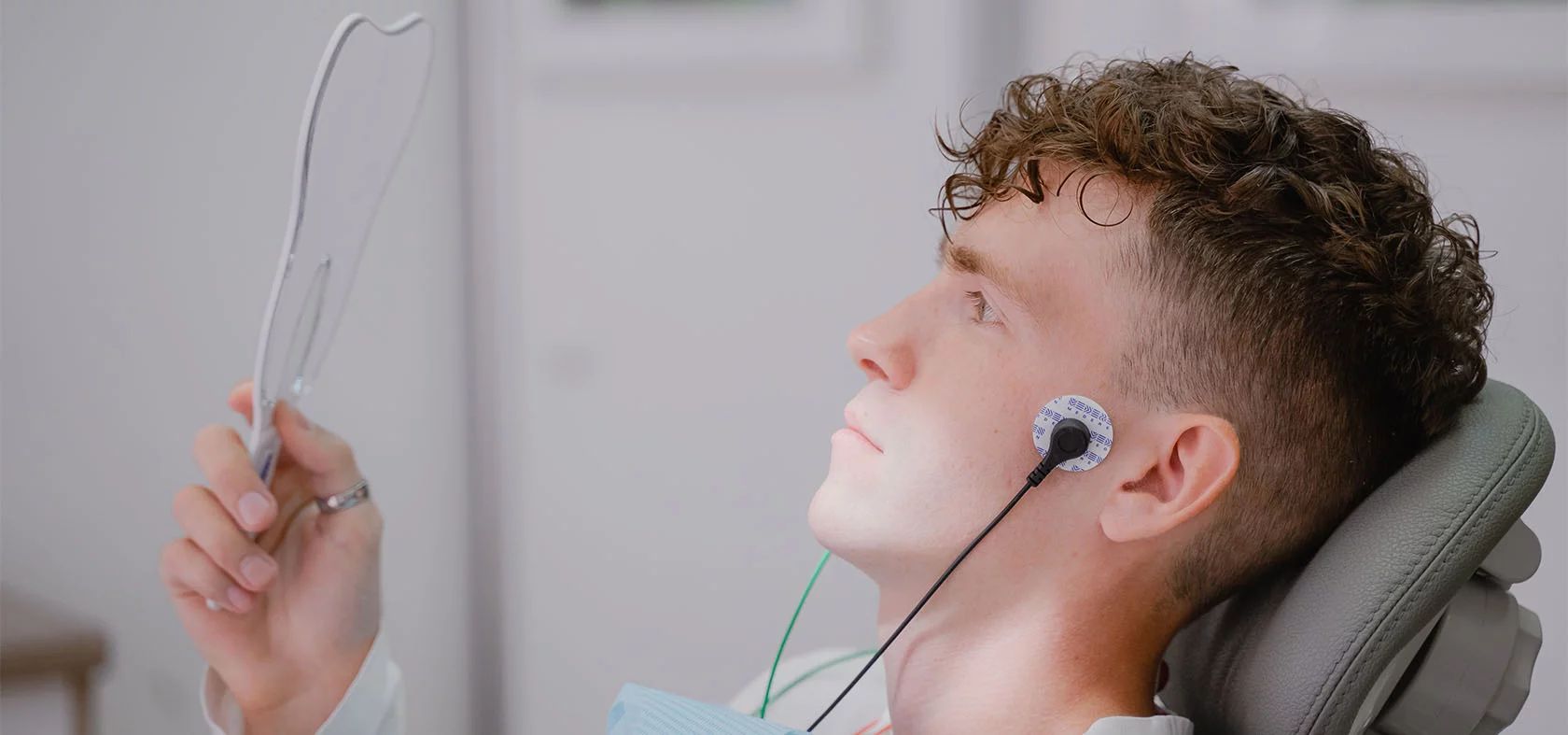
What should I expect in the first days?
Once the anesthetic wears off, the tissues around the root are often tender, inflamed by the infection and by the work itself. Expect:
- Tenderness on biting or chewing on that side for a few days, sometimes up to two weeks.
- A mild ache that usually responds to over-the-counter pain relief. Ask us which one suits your health history before you leave.
- Sore gums where the rubber dam (the thin sheet that keeps saliva out of the tooth) was clamped.
- A temporary filling that feels slightly high or rough until the final filling or crown is placed.
Discomfort should ease day by day. It should not climb.
How do I know the root canal went well?
A sound root canal starts with a diagnosis: an X-ray and, when the anatomy is unclear, a CBCT (a three-dimensional dental scan). The tooth is isolated with a rubber dam, every canal is cleaned under magnification and sealed tightly with gutta-percha (a rubber-like filling material), and a back tooth gets a crown soon afterward, because a tooth without its pulp is more brittle. The real check is an X-ray months later showing the bone around the root tip healing.
Why does a root-canaled tooth hurt months or years later?
A tooth with no pulp can still hurt, because the bone and ligament around the root are alive. The usual causes:
- Infection that remained or returned. A canal that was missed, cleaned incompletely or sealed late can hold bacteria: a dull ache, pain on biting, swelling, or a small pimple on the gum that drains pus. On an X-ray this often shows as a dark area at the root tip, a granuloma or cyst (both pockets of inflamed tissue).
- A crack or fracture. Pain that comes and goes on biting, especially on release, points to a cracked root or restoration. A fractured root usually means the tooth cannot be saved.
- A leaking or worn filling or crown. Edges open with time and bacteria get in.
- A high bite. A filling or crown that meets the opposite tooth first makes the tooth sore with every bite.
What are the treatment options?
We find the cause first, then treat it:
- Bite adjustment: a few minutes of polishing when the restoration is high.
- A new filling or crown when the old one leaks and the canals look sound.
- Retreatment: the old filling material is removed and the canals, including any that were missed, are cleaned and sealed again, sometimes through a small opening in the crown.
- Apical surgery: removing the infected root tip through the gum when retreatment cannot reach the problem.
- Extraction, when the root is fractured or the tooth cannot be restored, followed by a plan to replace it, often with a dental implant.
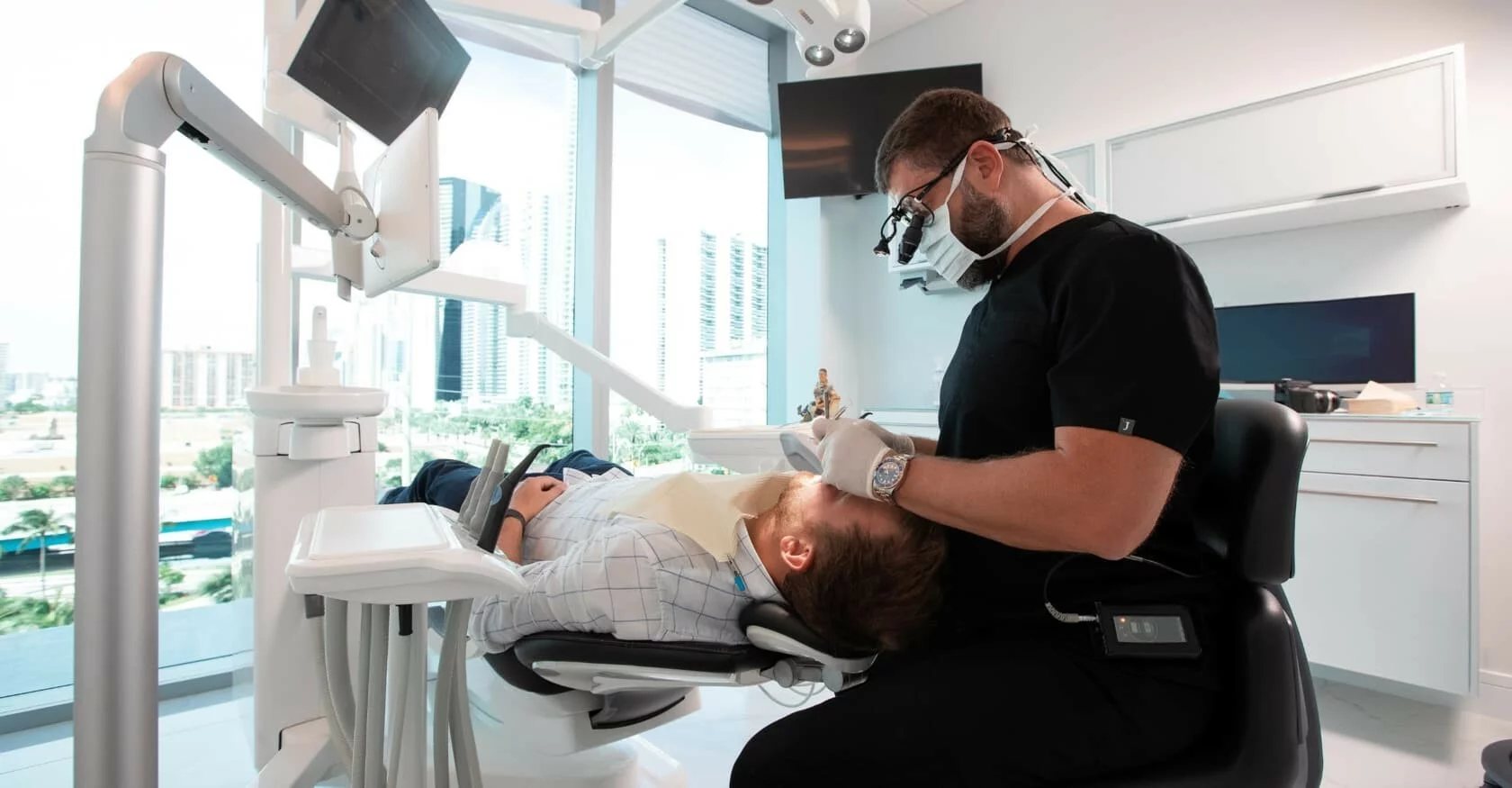
Root canal treatment and retreatment are done at our office by an endodontist (a dentist with additional residency training in root canal treatment), working under an operating microscope that magnifies and lights the inside of the tooth. Dr. Tetri tells you plainly when a tooth deserves another attempt and when it does not.
What can I do before the visit?
Chew on the other side and use the over-the-counter pain reliever that suits your health history. Do not take leftover antibiotics; they never replace treating the tooth.
When to call us
Call the same day if pain is increasing instead of easing, the gum or face swells, you notice a bad taste or a pimple on the gum, or the tooth still hurts on biting two weeks after treatment. Swelling that spreads toward the eye or neck, fever, or difficulty swallowing or breathing is a medical emergency: call 911 or go to an emergency room.
Questions patients ask
How long does pain last after a root canal?
Most tenderness fades within a few days; sensitivity on biting can take up to two weeks. Pain that lasts longer or worsens is a reason to be seen.
Do I need a crown after a root canal?
On molars and premolars, almost always. The crown holds the tooth together so it is less likely to split.