What usually causes jaw pain?
TMJ disorders. The temporomandibular joint (TMJ) connects the lower jaw to the skull in front of each ear. A TMJ disorder (TMD) is any problem with that joint or the muscles that move it. You may notice clicking, a jaw that catches or locks, limited opening, an earache or headaches in the temples. Clenching, injury and arthritis often contribute; there is rarely a single cause.
Grinding and clenching (bruxism). Many people clench by day or grind at night without knowing it. The muscles ache, the pain spreads to the temple and ear, and teeth chip, wear and become sensitive.
A tooth problem. Deep decay or pulpitis, an inflamed nerve inside a tooth, can send pain through the whole jaw, often worse at night.
A salivary gland infection (sialadenitis) causes a tender swelling under the jaw or in the cheek.
A sinus infection can make the upper back teeth and the upper jaw ache, usually with a blocked nose.
Injury. A blow to the face can fracture or dislocate the jaw.
What rare causes should I know about?
- Heart attack. Pain in the lower jaw with chest pressure, shortness of breath, nausea, sweating, or pain in the arm or back can be a heart attack. Women are more likely to have this pattern. Call 911, not a dentist.
- Arthritis and autoimmune disease. Rheumatoid arthritis, lupus and related conditions can inflame the jaw joint.
- Trigeminal neuralgia. A nerve disorder that causes brief, electric-shock pains in the face, set off by touch, chewing or talking.
- Osteonecrosis of the jaw. Bone that dies after losing its blood supply, linked mainly to certain bone-strengthening and cancer medications and to head and neck radiation. Tell us every medication you take.
- Oral cancer. Uncommon, but a sore, lump or numb patch that has not healed in two weeks must be examined.
Are my headaches coming from my jaw?
Sometimes. The chewing muscles attach at the temples, and tired muscles ache there. TMD and headache often occur together, but treating the jaw does not reliably stop a headache.
How do we find the cause?
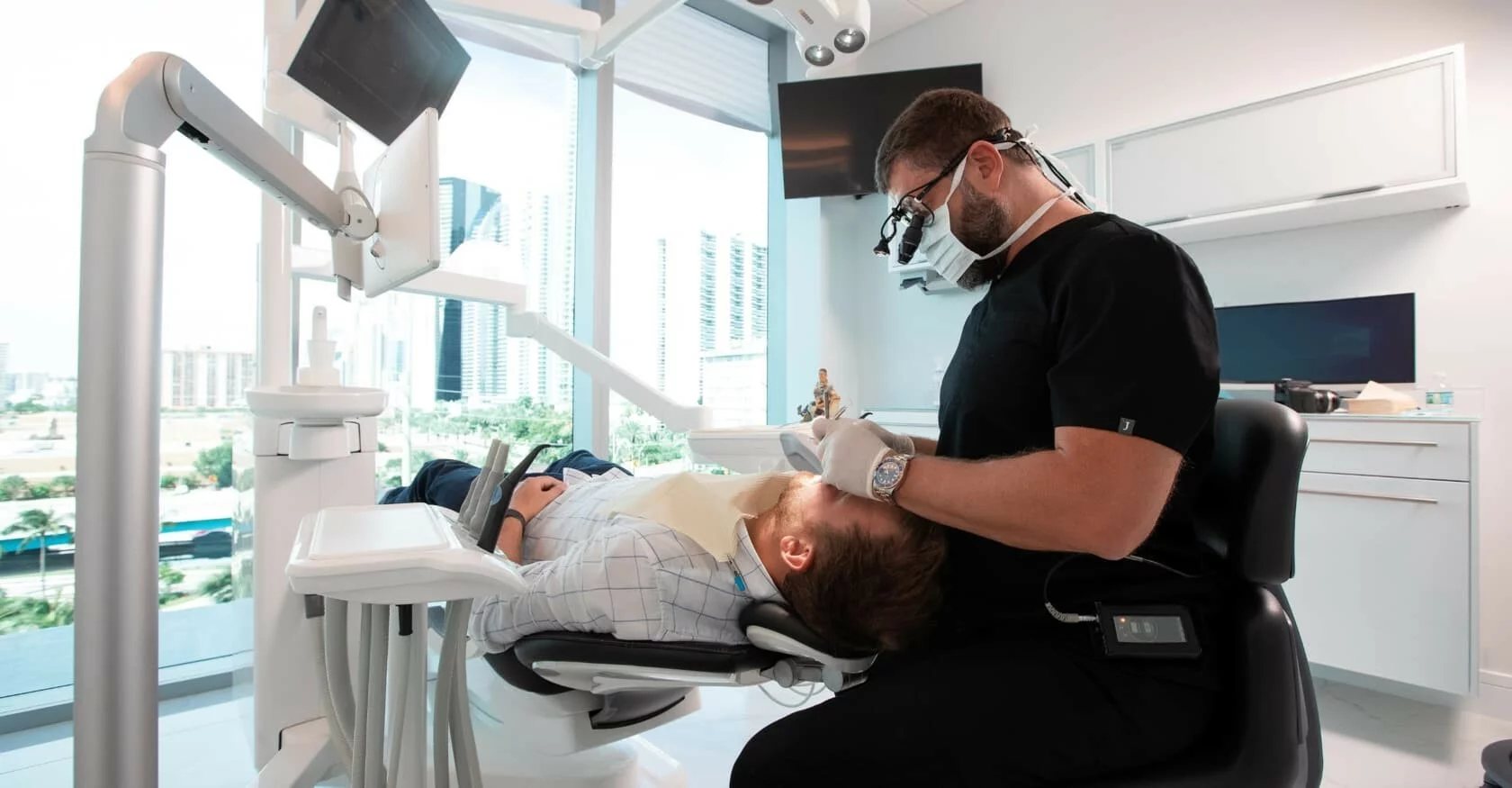
Dr. Tetri starts with a history and examination, which answer most of the question: where it hurts, when, how far you open, what the joint sounds like. Imaging is added only when it changes the plan: a panoramic X-ray (one image of all the teeth and jaws), a CBCT (a three-dimensional dental scan) of the joint, or an MRI (a magnetic scan of soft tissue) when the question is the disc, the cartilage cushion inside the joint.
How is jaw pain treated?
Reversible care comes first; most TMD improves with it:
- Self-care. Soft food cut small, warm compresses, no gum or wide yawns, and attention to daytime clenching.
- An occlusal splint, a custom appliance worn over the teeth, usually at night, meant to spread the load and ease muscle tension. It is worn for a set period, not around the clock.
- Muscle care. Stretching, jaw exercises and physical therapy where they help.
- Short courses of medication for pain and muscle tension.
- Botulinum toxin injections (a muscle-relaxing medicine; Botox is one brand) can ease clenching pain in some patients; the evidence is mixed and the effect wears off.
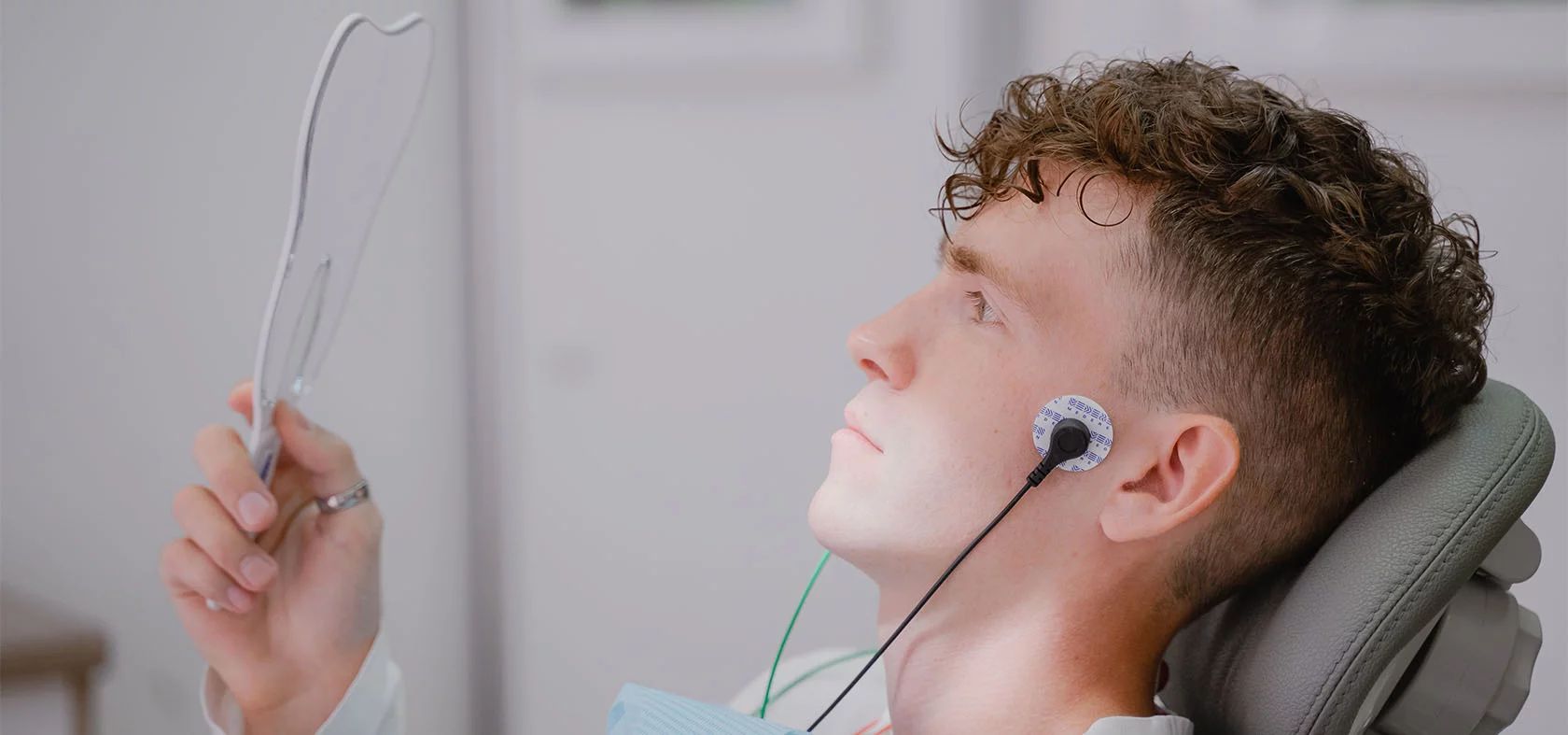
- TENS (transcutaneous electrical nerve stimulation) uses a low current to relax the chewing muscles; evidence for lasting relief is limited.
Irreversible bite changes (reshaping teeth, braces, crowns) are not routine TMD treatment; we discuss them only when the bite needs work for its own reasons.
Read more about TMJ disorders and bruxism and grinding.
When to call us
Call us if jaw pain lasts more than a week, your jaw locks, a tooth hurts at night, or there is swelling under the jaw. Jaw pain with chest pressure or shortness of breath is a 911 call.
Sources
- National Institute of Dental and Craniofacial Research: TMD (Temporomandibular Disorders)
- IADR/AADR science policy statement on temporomandibular disorders (2010)
- American Heart Association: Warning signs of a heart attack
About the author: Dr. Baruch Tetri, DDS, is a periodontist. He earned his DDS at NYU College of Dentistry in 2006, completed his Certificate in Periodontics in 2009, and is a Diplomate of the American Board of Periodontology.