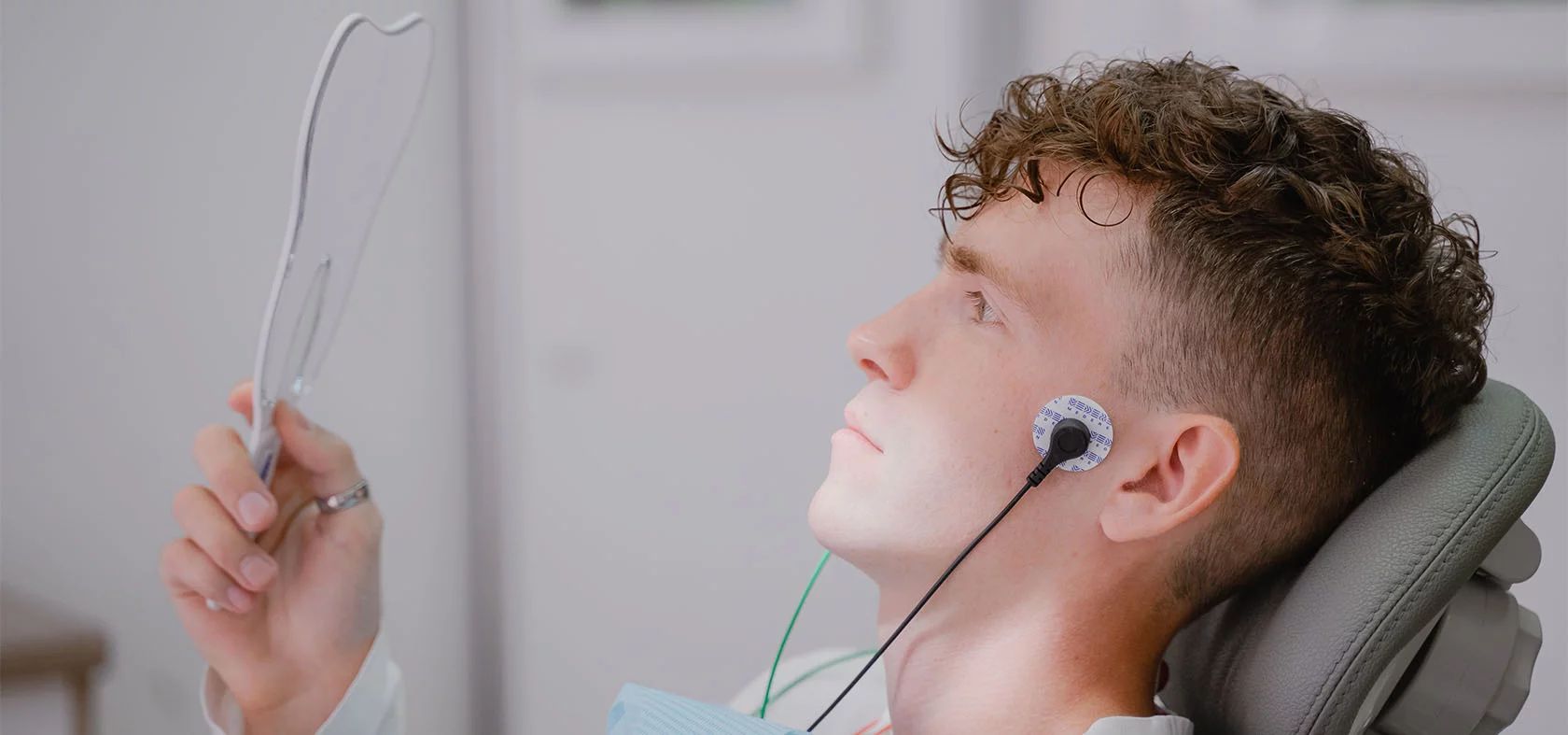
Who are veneers for?
Veneers can address chips, worn edges, small gaps, stains from inside the tooth that whitening cannot lift, and enamel that formed unevenly (enamel hypoplasia). Gum disease, grinding and decay are treated first. Dr. Tetri is a periodontist, a dentist trained in the gums and the bone around the teeth, so the gums are checked before any tooth is prepared. Composite veneers (tooth-colored resin, applied directly) are quicker and cost less, while porcelain holds its color and shape longer; our porcelain veneers page compares the two.
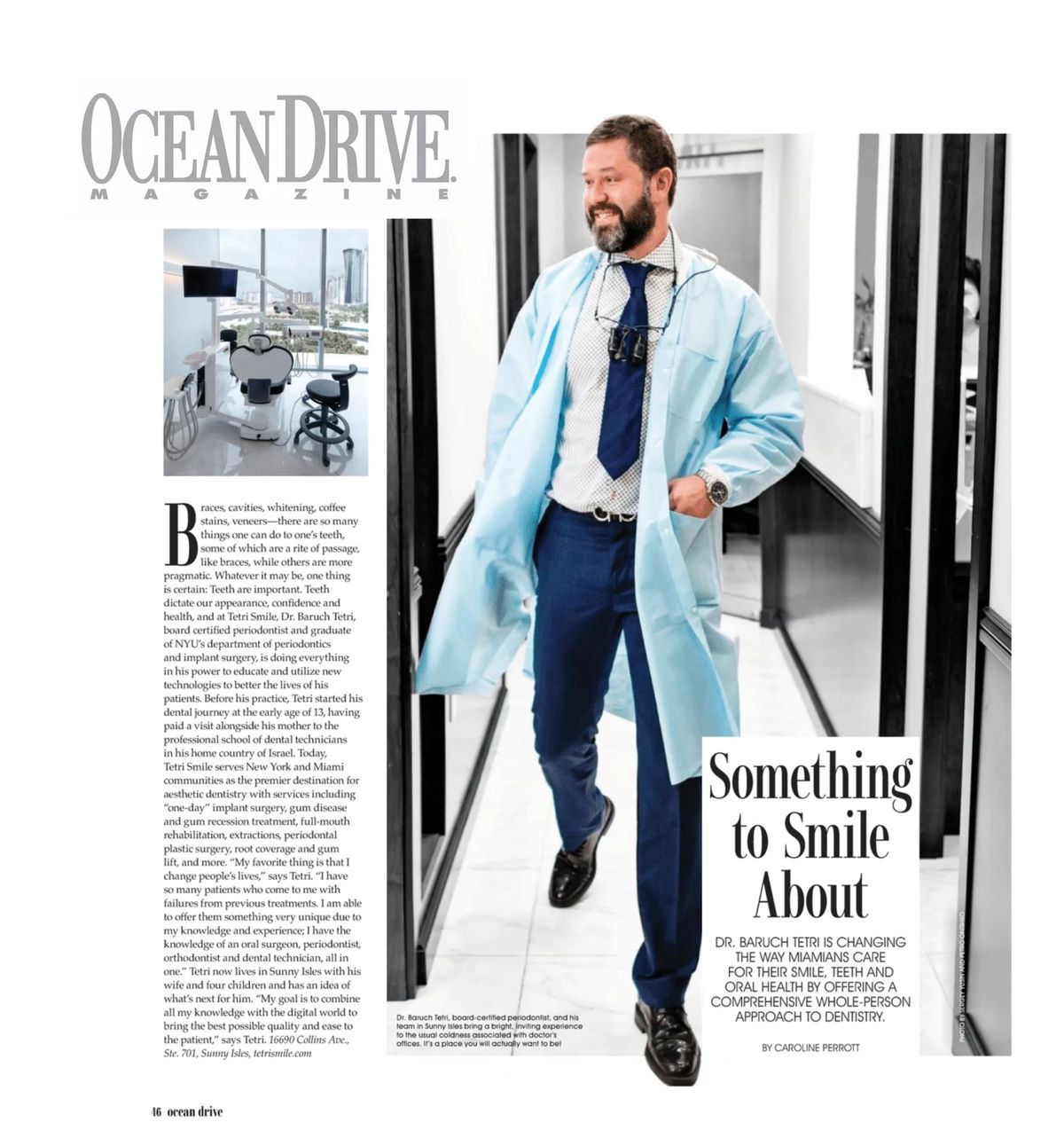
Does the examination hurt?
Usually not. The first visit is looking, photographs, a bite check and X-rays. Where the case allows, we scan the teeth digitally, and we can show a preview of the proposed shape before any enamel is touched.
Does the preparation hurt?
Most veneers need a thin layer of enamel (the hard outer layer of the tooth) removed so the ceramic sits flush, usually a few tenths of a millimeter, and some need none (a no-prep veneer). Under local anesthesia most people feel pressure, vibration and water rather than pain; if you feel more than that, tell us and we add anesthetic and wait. If the appointment itself is what you dread, sedation (medication that makes you calm and drowsy) can be discussed after a medical review, where our permits and team allow; see sedation at our office.
We then scan the teeth and, where needed, fit temporary veneers to wear until the porcelain is ready. They are plastic, so go easy on hard and sticky food, and expect a little sensitivity to cold.
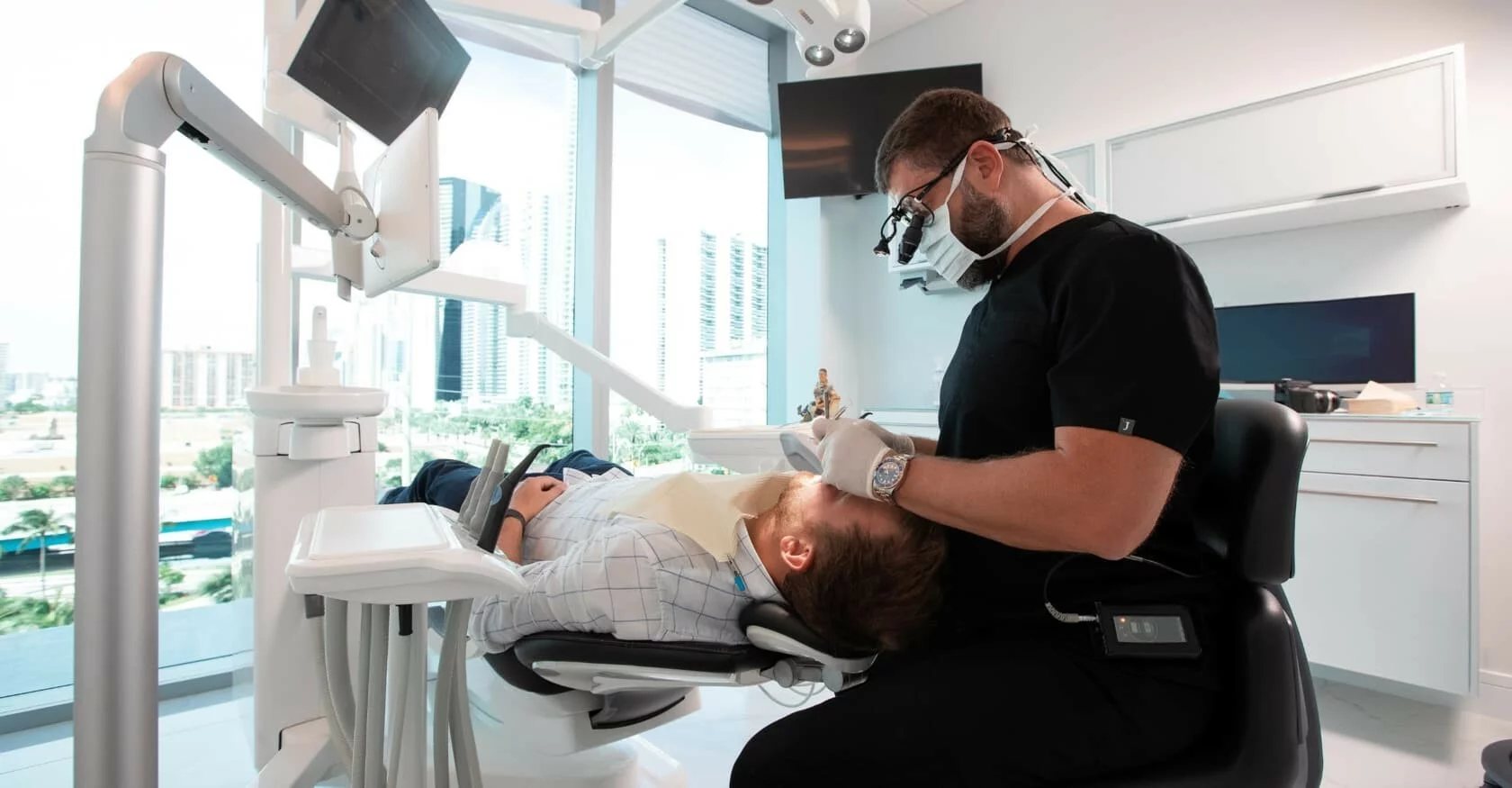
Does bonding the veneers hurt?
Usually not. At the fit visit the temporaries come off, each veneer is tried in, and the color of the bonding cement is checked. Then the veneers are bonded one by one and the edges polished. You will feel pressure and taste the cleaning solutions; we can numb the area if you prefer. Dr. Tetri works under magnification to finish the margin, where the ceramic meets the tooth, as smoothly as he can, because a smooth margin is easier for the gum to stay healthy against.
What will I feel in the days after?
- Sensitivity to hot and cold for a few days, occasionally a week or two, fading as the tooth settles.
- A feeling that the teeth are bigger, which passes as lips and tongue adjust.
- A slightly tender gum where the margin sits close to it.
- A bite that feels different. If a veneer feels high when you bite, call; a short adjustment usually settles it.
Pain that increases over days, or a tooth that aches on its own, needs a call.
How do I care for new veneers?
A soft brush, daily floss, hygiene visits and a night guard if you grind: the details are in How to take care of your porcelain veneers.
Questions patients ask
Can veneers hurt months later?
Lasting pain usually points to a bite problem, a gum problem at the margin, or a tooth that needed treatment before the veneer went on. Each can be diagnosed, and some can be corrected without replacing the veneer.
Is the preparation reversible?
No. Removed enamel does not grow back, which is why we compare the alternatives with you first.
How long do veneers last?
Well-made porcelain veneers commonly last ten years or more; your bite, your gums and your habits decide the rest.
When to call us
Call 786-320-5445 if a veneer feels high, loose or sharp, if sensitivity is getting worse, or if the gum around a veneer bleeds or swells.
Source: Beier UR, et al. Clinical performance of porcelain laminate veneers for up to 20 years. Int J Prosthodont.