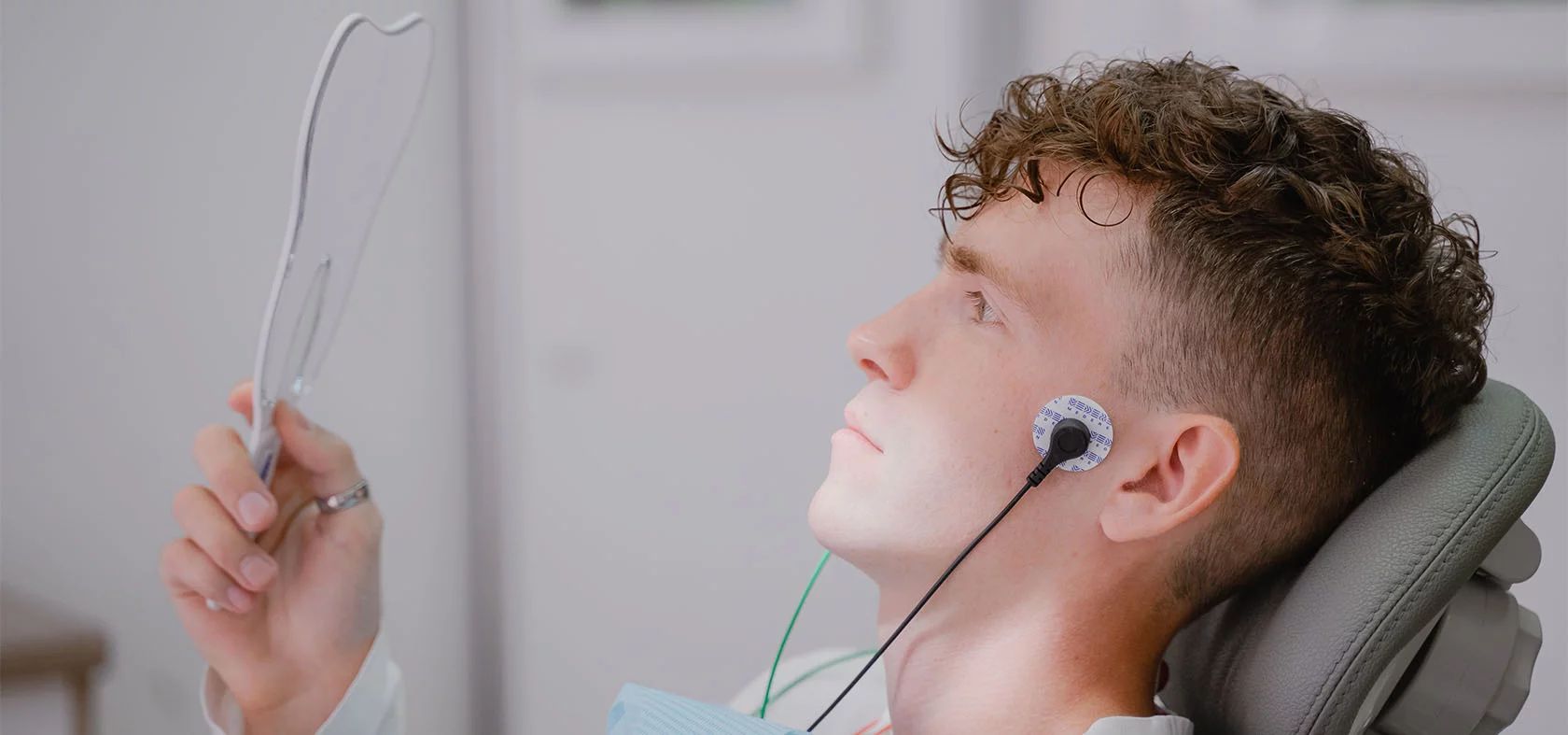
What is normal in the first days after a crown?
- Sensitivity to hot and cold for a few days to two weeks, fading as the nerve settles.
- A sore gum around the crown, easing within a few days.
- A bite that feels high. If the crown touches first when you close, chewing hurts. Adjusting it takes minutes; call us.
Not normal: pain that worsens after day three or four, pain on chewing soft food, swelling, a bad taste or pus, or a loose crown.
Why does a tooth hurt under a crown months or years later?
The nerve is inflamed or dying. Deep decay, the shaping of the tooth or a crack can inflame the pulp, the soft tissue inside the tooth. This inflammation, pulpitis, gives lingering pain to heat and cold, then a throbbing ache, often worse lying down. The usual treatment is a root canal, which removes the inflamed pulp and seals the canals.
An incomplete or failed root canal. A canal that was missed or not filled to the root tip can harbor bacteria, and infection builds at the root end. Retreatment (redoing the root canal), through the crown where possible, is the usual answer; when it is not possible, we explain the alternatives.
A leaking margin. The margin is the edge where the crown meets the tooth. If cement washes out or the gum recedes, a gap opens, plaque collects and decay starts under the crown. The decay is treated and the crown replaced.
Gum inflammation. A crown edge that sits too deep under the gum, or overhangs it, traps plaque and keeps the gum sore. Sometimes the crown needs remaking; sometimes the gum and bone need periodontal treatment (care of the gums and supporting bone), which Dr. Tetri provides as a periodontist.
A cracked tooth or root. Grinding or biting a hard seed can crack a tooth, giving sharp pain on biting or on release. A cracked crown is replaced; a cracked root usually means the tooth cannot be kept.
What can I do before the visit?
- Sensitivity: a soft brush and a toothpaste for sensitive teeth.
- Sore gum: rinse with warm salt water and keep flossing gently around the crown.
- Pain on biting: chew on the other side; do not adjust the crown yourself.
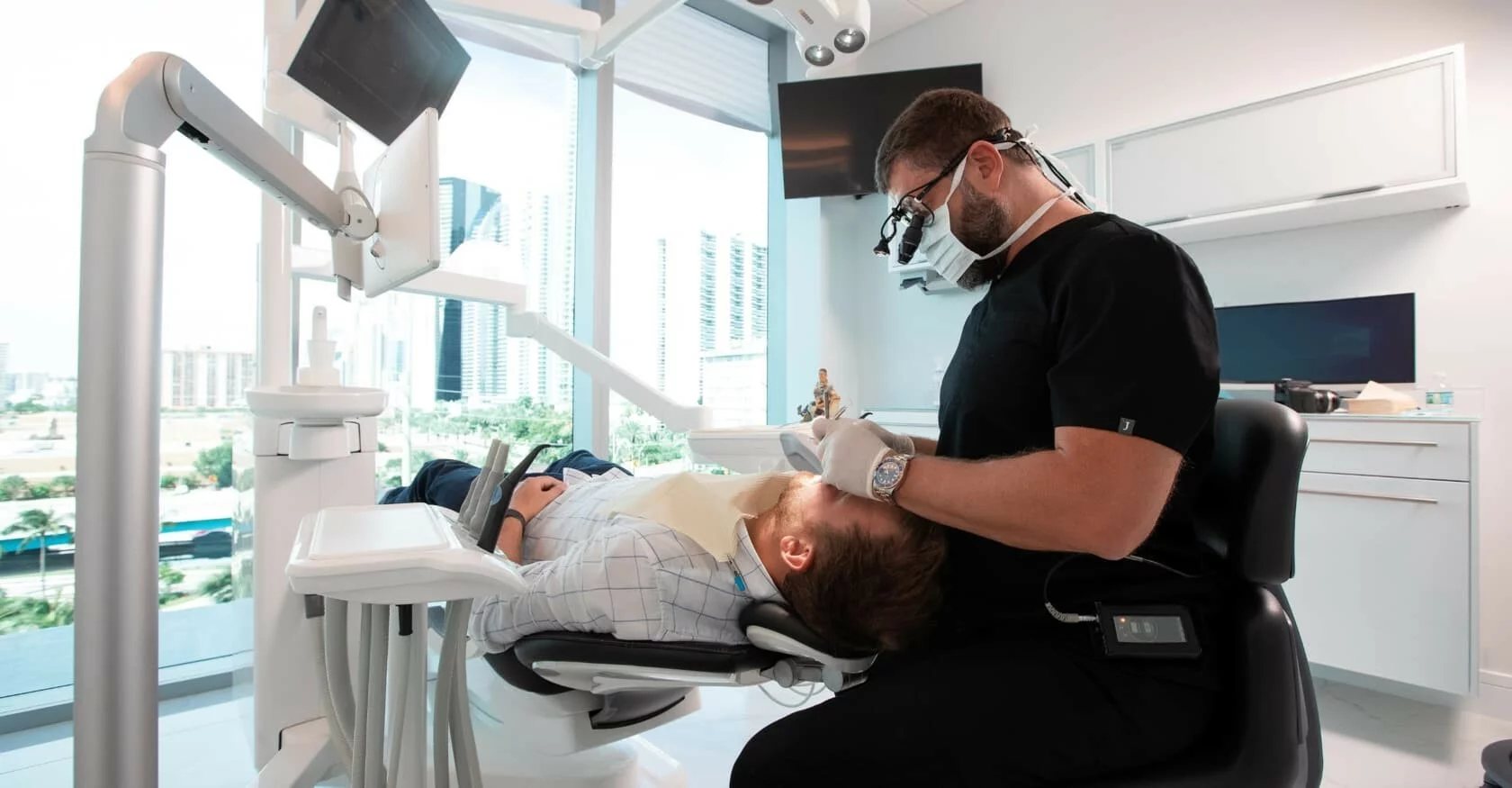
What happens when you come in?
- We listen. When it started, what triggers it, whether it wakes you.
- We examine the crown, the margin, the gum and the bite, and test the tooth with cold, tapping and a bite test for cracks.
- We take an X-ray, adding a CBCT (a three-dimensional dental scan) only when the flat image leaves a question, such as a missed canal.
- We explain the cause and the choices, including no treatment where reasonable, and what each costs.
Root canal treatment and retreatment are done at our office by an endodontist, a dentist who specializes in root canals, with magnification and a rubber dam (a thin sheet that keeps the tooth dry). New crowns are made from a digital scan.
Can the pain be treated without replacing the crown?
Often, yes. A high bite is adjusted. A root canal or retreatment can usually be done through the crown, and the opening sealed with a filling. A crown is replaced when it leaks, is cracked or undermined by decay, or has to come off to reach the problem.
Read more about dental crowns and root canal treatment.
How do I prevent it?
Brush twice a day, floss along the crown edge daily, wear a night guard (a custom appliance worn during sleep) if you grind, and keep your check-ups.
When to call us
Call the same day for swelling, pus, a fever, a crown that has come off (keep it, bring it, and do not glue it back), or pain that keeps getting worse.
Sources
- American Association of Endodontists: Endodontic retreatment explained
- American Association of Endodontists: Cracked teeth
- ADA MouthHealthy: Crowns
About the author: Dr. Baruch Tetri, DDS, is a periodontist. He earned his DDS at NYU College of Dentistry in 2006, completed his Certificate in Periodontics in 2009, and is a Diplomate of the American Board of Periodontology.